Classic Snickerdoodles
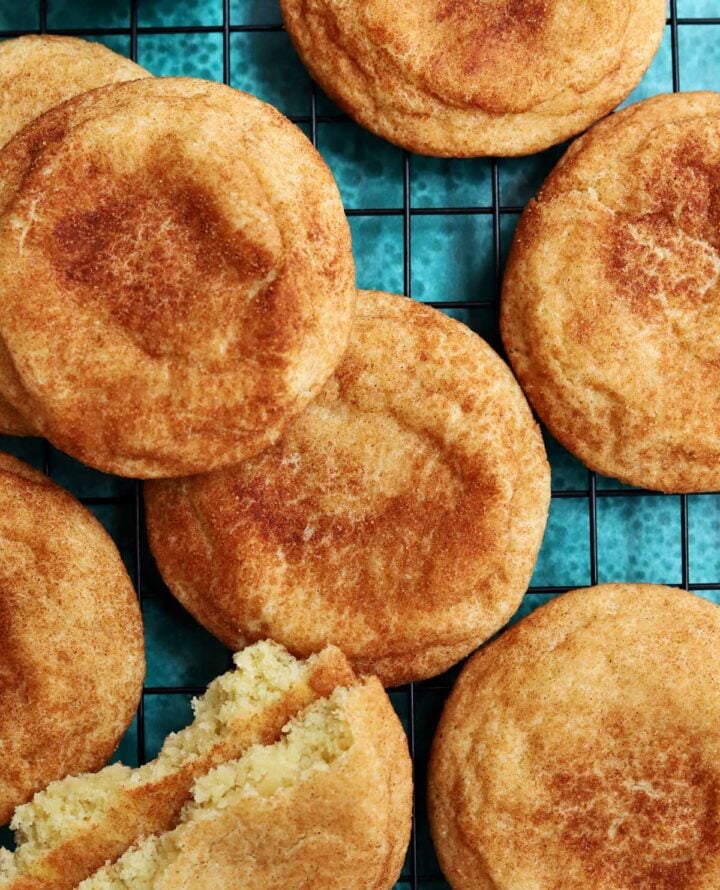
Here's how to make the most perfect, Classic Snickerdoodles with that signature cinnamon sugar coating and tender, soft interior. This is such an easy recipe that comes together quickly with simple pantry ingredients. The dough doesn't require any chill time, so you can make a batch without any planning. Snickerdoodle cookies are a staple for every home baker and they're especially popular during the holidays when cinnamon spice makes everything nice. You'll love the butter vanilla flavor paired with the fragrant spice. What makes this recipe special is that it doesn't require any cream of tartar since it's not a common ingredient that most bakers stock in their pantry. Instead, I use a secret ingredient that you most likely already have and it works just as well. If you love snickerdoodles, try my Brown Butter Snickerdoodles Cookies as well!
WHY THIS RECIPE WORKS
- Soft tender snickerdoodles - I've had many dry and crumbly snickerdoodle cookies, and these are not that. They're soft and tender with a slight chewiness. It's a lovely texture.
- Buttery vanilla flavor - the simple buttery cookie dough is flavored with vanilla and I use a little brown sugar to add a hint of toffee notes.
- Cinnamon sugar coating - these cookies are rolled in cinnamon sugar for a sweet crunchy spicy coating. It's the characteristic feature of snickerdoodles!
- No cream of tartar - many recipes for snickerdoodle cookies require cream of tartar, but that is an ingredient that few people have stocked in their pantry. My recipe does not require cream of tartar.
- Secret ingredient - in addition to baking soda and baking powder, I use a secret ingredient to give that tangy flavor characteristic of cream of tartar. Read below in the INGREDIENTS section to find out.
- Double cinnamon sugar - my best tip is to roll them in cinnamon sugar twice since the cinnamon settles to the bottom of the bowl and the second round of rolling is where you get all of the flavor after you've spent most of the sugar.
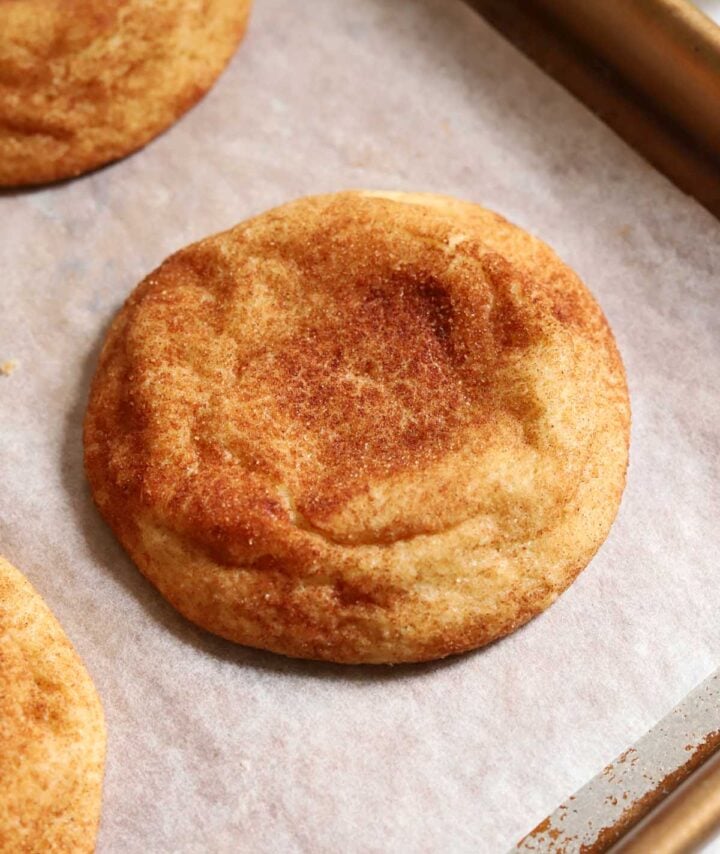
Can I Make Snickerdoodle Cookies Without Cream of Tartar?
Snickerdoodle cookie recipes traditionally use cream of tartar which is and acidifying agent. It is pure tartaric acid in powdered form that will react with baking soda (alkaline ingredient) to product gas bubbles that help the cookie dough spread and puff. Cream of tartar is an old-fashioned ingredient that most households don't carry, so my recipe does not use it. You can easily create the same if not similar effect with baking powder which is a combination of acid and base (bicarbonate of soda) ingredients already.
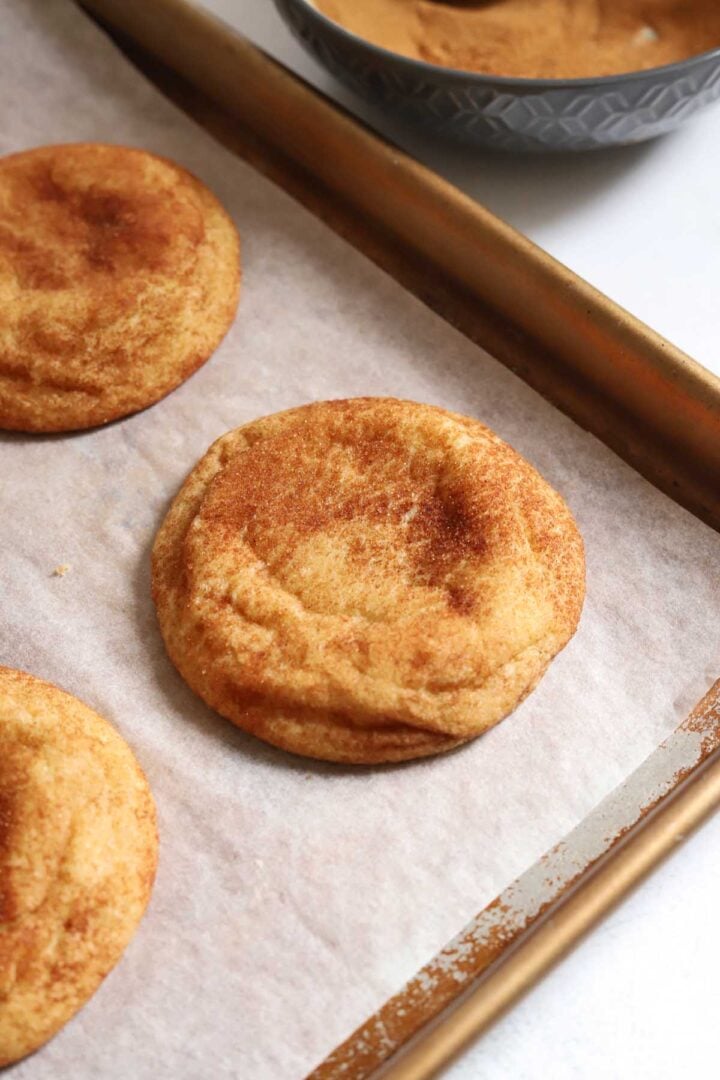
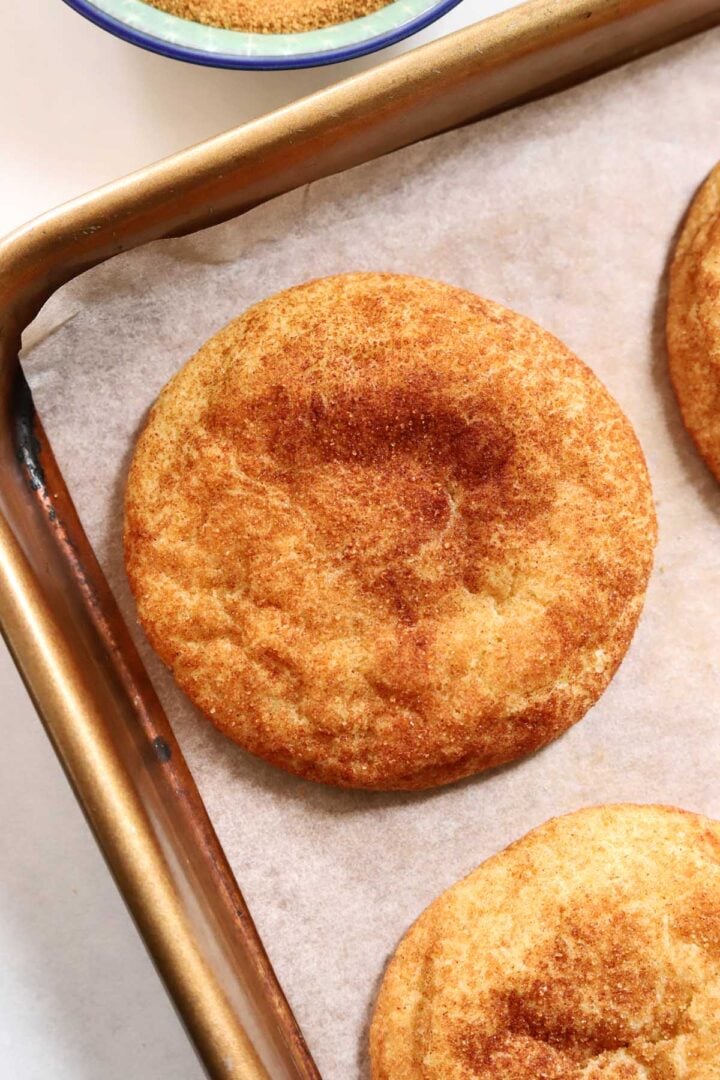
What you'll notice when you don't use cream of tarter is that the crinkly top on the baked cookies is not as defined and the cookies are a bit softer. You will not really notice a difference in taste since the cinnamon flavor is quite dominating. My recipe without cream of tartar uses a tiny bit of lemon juice to provide the acidity needed to quickly drive the reaction with baking soda and to introduce that bit of tangy taste.

INGREDIENTS
- Butter - for this recipe you can use salted butter or unsalted butter. If you use salted butter, then reduce the added salt by half.
- Brown sugar - the molasses from a bit of light brown sugar molasses gives these cookies a slight toffee-like flavor to enhance the buttery notes and vanilla. I prefer light brown sugar here because dark brown sugar has twice as much molasses and it can overpower the vanilla flavor and also make the dough darker in color.
- Granulated sugar - this recipe uses both brown sugar and white granulated sugar. The white sugar will make them sweet and tender, and give them nice golden bottoms with tanned edges.
- Egg - one whole egg will set these cookies to perfection.
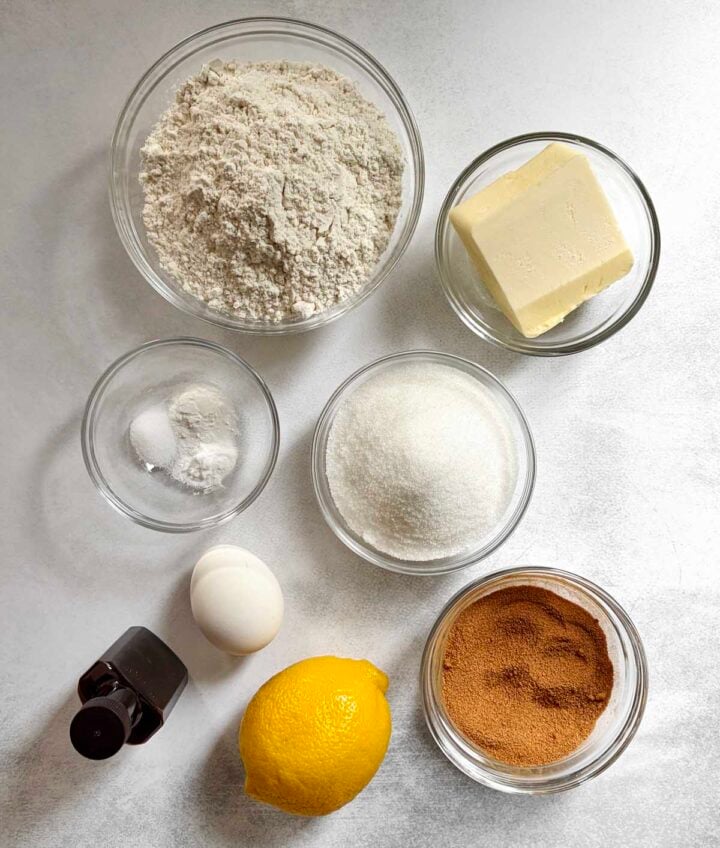
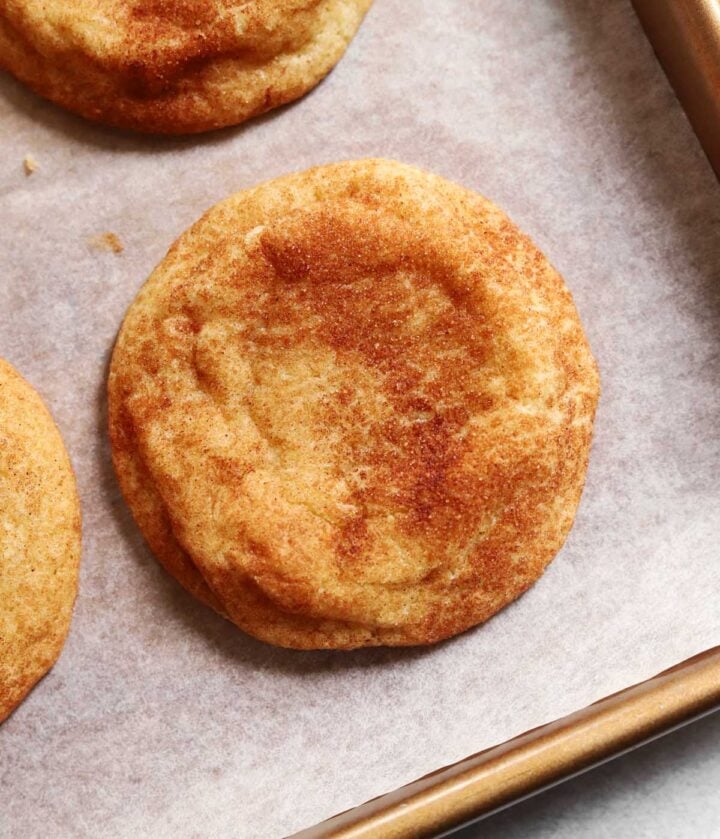
- Lemon juice - this may seem strange, but it helps add that signature tanginess that you'd normally get from cream of tartar. It will react further with the baking soda to help the cookie dough spread. You only need a level ½ teaspoon though. If you use more than that, the cookies will spread too much.
- Pure vanilla extract - snickerdoodle cookie dough is based on a vanilla sugar cookie, so the vanilla quality is important. I like this Madagascar Bourbon Vanilla extract
- All-purpose flour - simple unbleached AP flour is ideal for making chewy cookies.
- Cinnamon sugar - the cinnamon sugar is the essence of snickerdoodles. Don't skip this part!
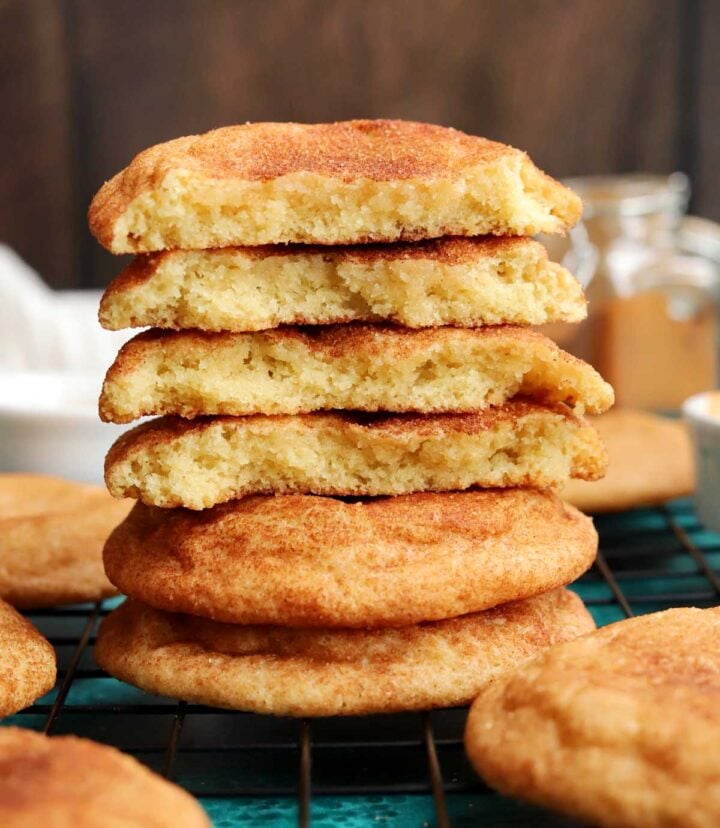
STEP BY STEP INSTRUCTIONS
- STEP 1). Combine dry ingredients. Combine flour, baking powder, baking soda and salt in a large bowl. Whisk to blend evenly and set aside.
- STEP 2). Blend butter and sugar. Combine soft butter, granulated sugar and vanilla extract in a large bowl and mix well using the creaming technique with a rubber spatula until the mixture looks a little fluffy and slightly pale. You want to incorporate some air for a tender crumb, but not so much that it will make the cookies too cakey. If you use a stand mixture, mix on medium speed with the paddle attachment for 1-2 minutes.
- STEP 3). Mix in egg until well incorporated and mixture looks smooth and creamy, then mix in lemon juice.
- STEP 4). Add the dry ingredients and fold them in until evenly incorporated.
- STEP 5). Make the coating. Combine sugar and cinnamon in a small bowl and mix to blend evenly.
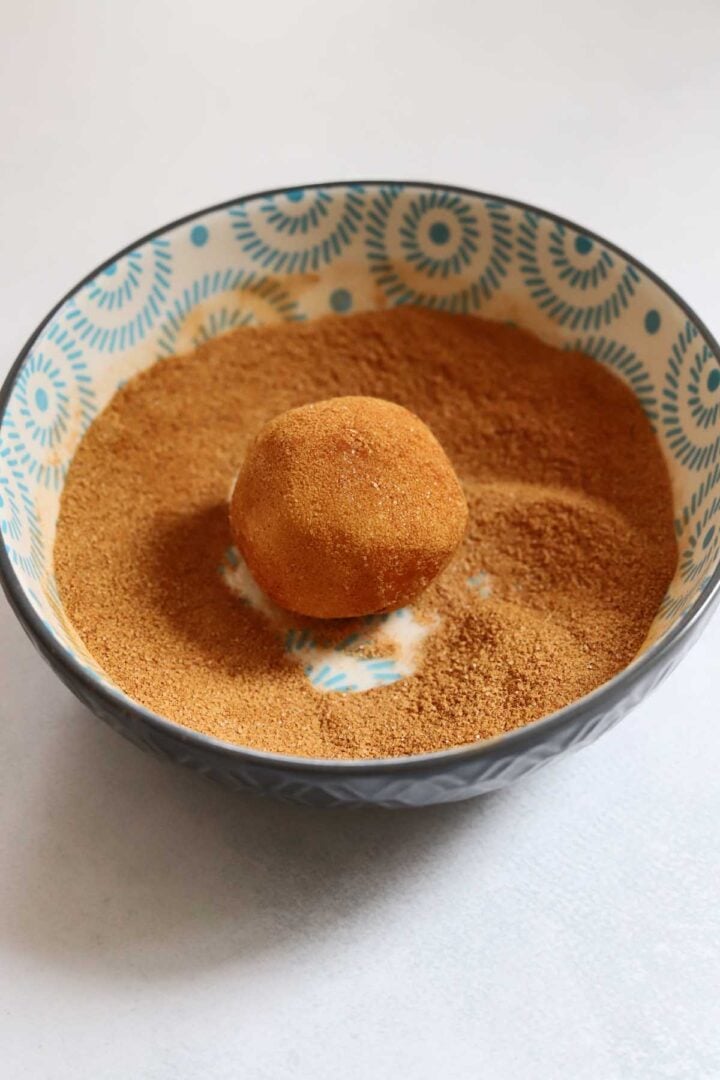
- STEP 6). Scoop and roll. Use a 1 or 1.25 oz cookie scoop to portion out dough and roll it into a smooth ball in your hands. You can also make fewer larger cookies and they will just take a couple extra minutes to bake. Roll each ball around in the cinnamon sugar mixture so they are evenly coated. Once you've rolled them all, do it again so you've rolled them twice.
- STEP 7). Bake. Place dough balls at least 3 inches apart on the prepared baking sheet. Bake for 10-12 minutes for larger cookies using 1.25oz silver scoop or 8-10 for smaller ones. Let sit on the cookie sheet for 2 minutes before transferring individually to a wire rack to cool.

EXPERT BAKING TIPS
- Measure the flour accurately to ensure you get the right texture. Too much flour will make the cookies dry and crumbly, while too little flour will cause them to spread excessively.
- Measure the lemon juice precisely. Too much added liquid will cause the cookies to spread excessively.
- Use a trigger-release cookie scoop to portion these cookies for even baking and roll the dough portions into smooth balls for a uniform shape.
- Let the dough rest for just 20 minutes while you preheat the oven. You don't need to chill this dough, but a little bit of time for the flour to hydrate will help with control the spread and improve the soft chewy texture.
- Roll twice in cinnamon sugar. As you coat the dough balls, the cinnamon settles to the bottom of the bowl and the second round of rolling is where you get all of the flavor after you've depleted most of the sugar and you start exposing more cinnamon.
RECIPE FAQ
Yes! I find the flavor is more rich with salted butter, but the difference is minor. If you use salted butter, I would suggest reducing the added salt by half. So, that's ¼ teaspoon of salt instead of ½ teaspoon.
Cream of tartar is dried, powdered tartaric acid. It is the acid ingredient that reacts with alkaline baking soda to make gas that leavens baked goods. Baking powder already has a blend of acid and base (alkaline component) to leaven baked goods. The difference is that cream of tartar reacts very fast with baking soda since it is pure acid and may lead to a puffier cookie, but really... in such a dry cookie dough you will barely see a difference at all.
No, you don't need to chill this cookie dough because the color is meant to be more pale and these cookies have the perfect texture even without chilling. You can scoop and bake this dough from room temperature. If you chill the dough, you will get even taller, thicker cookies if that's what you prefer.
You cannot make a 1:1 substitution for cream of tart in any recipe since it is pure acid. Instead, you will need to follow a recipe specifically designed to work without it, such as this one. In this recipe I use a combination of baking powder and baking soda to get the amount of puff and spread I want for these cookies. Using all baking powder will yield a cakier cookie, but I prefer some chewiness which is why I use some baking soda as well.
The purpose of cream of tartar in snickerdoodles is to provide the acid component to react with baking soda and help the cookies puff and rise. Baking powder is a blend of baking soda and acid components so adding soda and acid separately isn't necessary. Cream of tartar does impart a slight tang from the intense acidity, but for this recipe, I prefer it without.
STORING AND FREEZING
These cookies are best stored at room temperature in an airtight container for up to 5 days. They are best fresh, but also keep quite well.
Yes, you can freeze these cookies. Once completely cooled, place them in a resealable freezer bag and freeze for up to 3 months.
Craving more cookies?
If you love cookies, check out these recipes!
Lemon Blueberry Cookies with White Chocolate Chunks Coffee Pecan Chocolate Chip Cookies Double Peanut Butter Chocolate Chunk Cookies Hazelnut Double Chocolate Chunk Cookies THE BEST Chewy Chocolate Chip Cookies – Bakery Style!Video
Classic Snickerdoodle Cookies

Ingredients
Snickerdoodle Cookie Dough:
- 1 ⅓ cups plus 1 tbsp (200g) all-purpose flour
- ½ teaspoon baking powder
- ¼ teaspoon baking soda
- ¼ teaspoon salt
- ½ cup (113g) unsalted butter, softened
- ¾ cups (150g) granulated sugar
- 1 teaspoon (5ml) pure vanilla extract
- 1 large egg at room temperature
- ½ teaspoon fresh lemon juice
Cinnamon Sugar Coating:
- 4 tablespoon (50g) granulated sugar
- 2 ½ teaspoon ground cinnamon
Instructions
- Preheat the oven to 350°F. Line two large cookie sheets with parchment paper.
- Combine flour, baking powder, baking soda and salt in a large bowl. Whisk to blend evenly and set aside.
- Combine soft butter, granulated sugar and vanilla extract in a large bowl and mix well using the creaming technique with a rubber spatula until the mixture looks a little fluffy and slightly pale. You want to incorporate some air for a tender crumb, but not so much that it will make the cookies too cakey. If you use a stand mixture, mix on medium speed with the paddle attachment for 1-2 minutes.
- Mix in egg until well incorporated and mixture looks smooth and creamy, then mix in lemon juice.
- Add the dry ingredients and fold them in until evenly incorporated.
- Make the coating. Combine sugar and cinnamon in a small bowl and mix to blend evenly.
- Use a 1-oz cookie scoop or 1 ¼-oz cookie scoop to portion out dough and roll it into a smooth ball in your hands. Roll each ball around in the cinnamon sugar mixture so they are evenly coated. Once you've rolled them all, do it again so you've rolled them twice.
- Place dough balls at least 3 inches apart on the prepared baking sheet.
- Bake for 10-12 minutes for larger cookies using 1.25 oz scoop or 8-10 for smaller ones. Let sit on the cookie sheet for 2 minutes before transferring individually to a wire rack to cool.
- TIP: cinnamon will settle to the bottom of the bowl because it doesn't stick to the sugar, so the first balls you roll will have more sugar and less cinnamon. As you displace the sugar when you get to the last few dough balls, there will be more of the cinnamon dust at the bottom of the bowl and those dough balls will have a more concentrated cinnamon coating. Here's what I do: place coated dough balls on the tray in the oven for 20 seconds. Remove from oven and quickly roll again in cinnamon sugar, then continue to bake. The warmth will help more cinnamon sugar stick to it.