Video
How to make Flaky Pie Crust
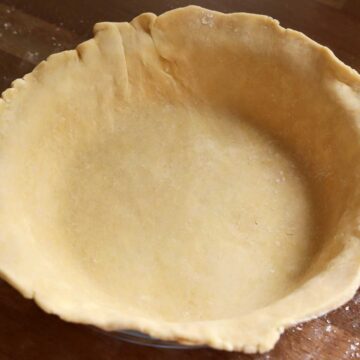
The ultimate tender AND flaky pie crust that you can use to make anything from juicy fruit pies, pecan pie, small hand pies/turnovers and tarts! It's a must-have recipe in your repertoire.
Ingredients
- 1 cup (227g) very cold unsalted butter
- ½ cup (120ml) ice cold water
- 2 ⅔ cups (380g) all-purpose flour
- 3 tablespoon (40g) granulated sugar
- 1 teaspoon fine table salt
Instructions
- Flash freeze the butter. First place the butter in the freezer for 10 minutes.
- Prepare ice water. Fill a cup with water and add some ice.
- Combine dry ingredients. Combine flour, sugar and salt in a large bowl. Whisk to blend evenly.
- Cut cold butter into small cubes if using a pastry cutter. Or, for best results, slice cold butter into thin sheets. This is my favorite technique for pie crust. I take a block of butter straight from the freezer and use a small sharp, thin-bladed serrated knife to slice it thinly. If you are using sticks of butter, imagine thin little squares. This creates cold sheets of fat that you can easily and quickly work into the flour so that it doesn't get too warm from your hands. The thin pieces also help create a laminated effect for extra flakiness.
- Finely blend in some butter. Add 2 tablespoons (28g) of cold butter (keep the rest of the butter in the fridge) and rub it into the flour mixture using your fingertips until it is evenly dispersed and the mixture resembles fine bread crumbs (you can also blend on medium-low speed in a stand mixer for 2 minutes or pulse in a food processor).
- Press in remaining butter. Toss the remaining cold sliced butter into the flour mixture, then use your fingers to incorporate it, smearing it between your thumbs and fingertips to rub the flour into the butter. The thin slices will help create an instant laminated effect (watch the video at the top of the recipe card for a demonstration). Continue to rub in the fat until the mixture looks very shaggy and all of the fat is coated with flour without any large pieces, but also it shouldn’t be blended in too finely as in Step 4. There should be some larger almond flake-sized pieces remaining and no dusty flour left in the bowl.
- Alternatively, instead of slicing the butter (if you find it too finicky) add the remaining cold butter in small cubes and rub it in, pressing and smearing it between your thumbs and fingertips to flatten pieces of butter. You can also use a pastry cutter (this is my all-time favorite one - it is strong and fits comfortably in the hand) to mince the butter into smaller pieces first. If you use my method of slicing the butter into thin sheets, then you can work it in with your hands and it will take much less effort than trying to press out cold cubes of fat. Continue to rub in the fat until it resembles coarse crumbs with some larger almond flake-sized pieces remaining. There should be no dusty flour in the bowl.
- Add water. Strain out the ice from your water and measure out ½ cup. Gradually sprinkle the cold water over the flour/butter mixture, one tablespoon at a time, while gently tossing with a fork until the dough is moistened and it clings together in clumps. The dough will hold together when squeezed or pressed when it is ready and it will hold the impressions of your fingers, but it should not form a ball. You can add another tablespoon of water as needed if it is too dry. Do this part by hand and don’t use the mixer once you add the water since it tends to over-mix in parts. Turn the shaggy mixture out onto a clean surface and bring it together with cupped hands, pressing in loose bits until it is cohesive. Do not knead.
- Shape the dough. Lay a large piece of plastic on the counter and place the dough on top. If some shaggy bits fall off, place them on top and pile them onto the dough. Bring the sides of the plastic up and over the dough and use it to squeeze the dough together again.
- Chill the dough. Wrap it firmly and refrigerate for at least 2 hours or over night. You can also divide the shaggy dough in half and wrap each portion into two discs so you can keep one chilled while you roll the other one when making a double crust pie.
