
Salted Caramel Cheesecake
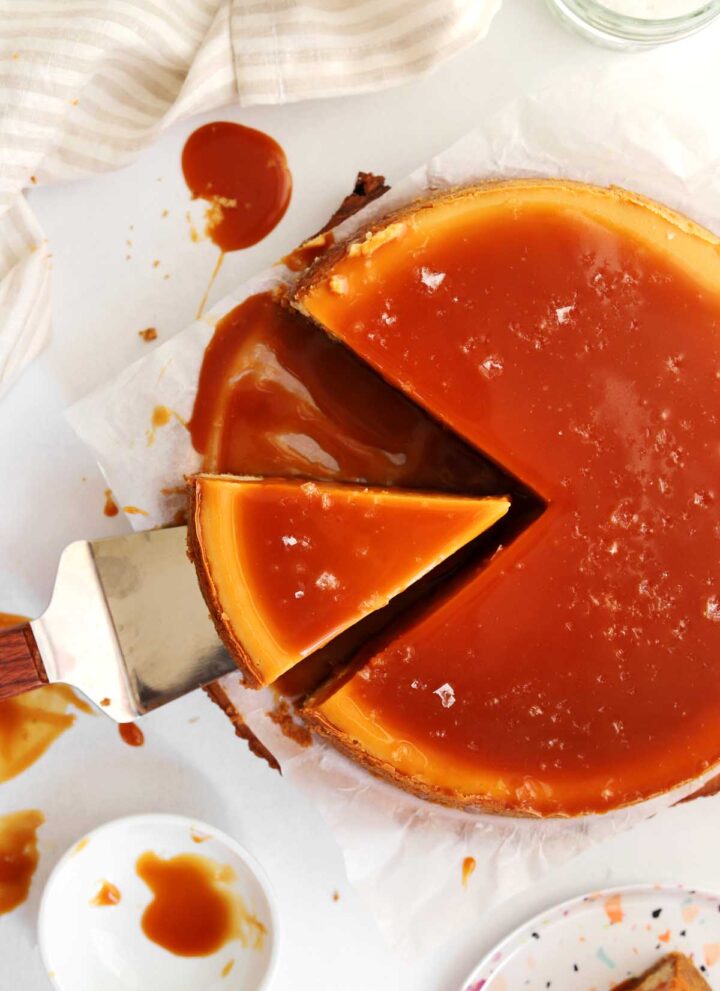
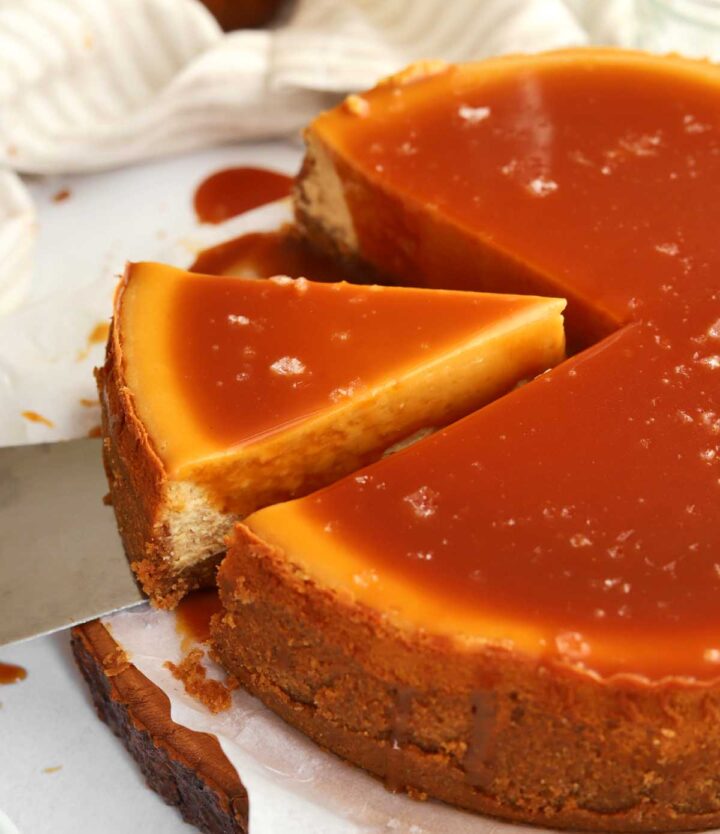
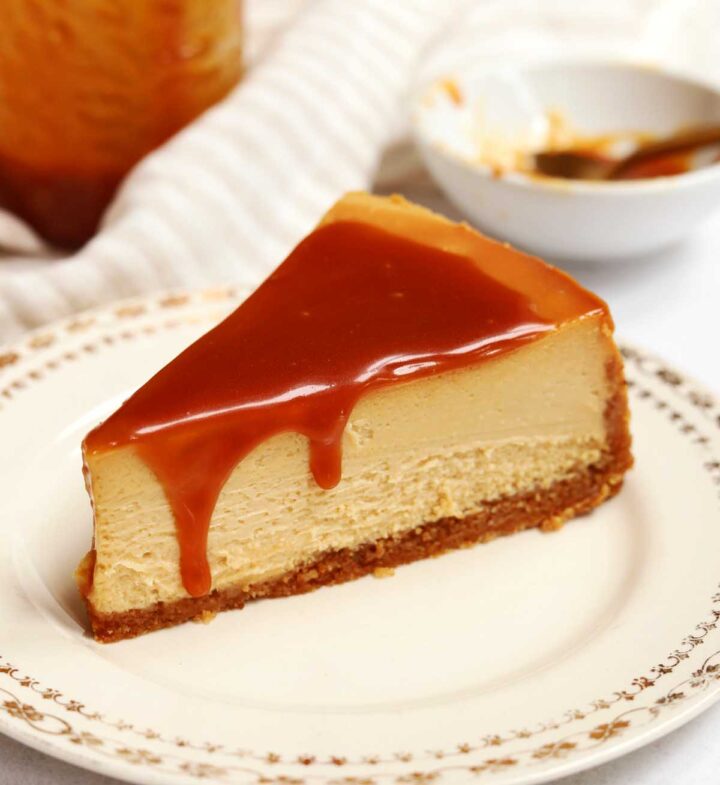
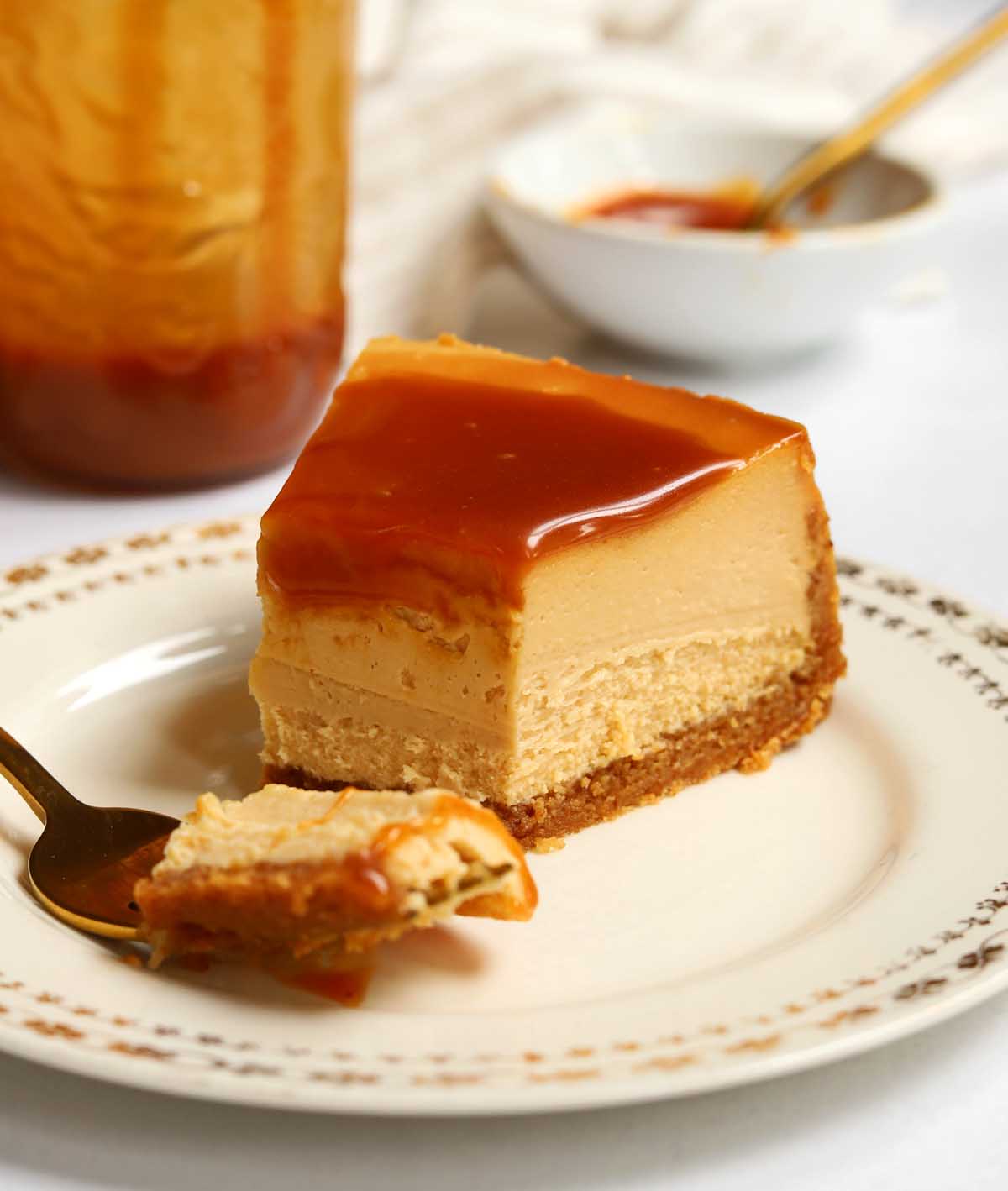
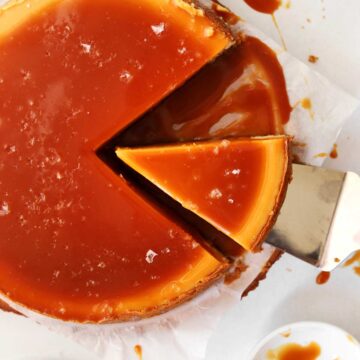
This Salted Caramel Cheesecake is so smooth, creamy and luxurious, topped with my ultra rich salted caramel sauce. This could be the best cheesecake you ever have! The filling is extra silky from the caramel sauce that bakes right into the batter, which is sweetened with brown sugar to add more caramel-like flavor. After it cools, I pour over the caramel sauce and finish it with flaky sea salt. It's truly a dream and perfect for those dessert people who love sweet and salty together! If you love cheesecake, you can also try my Perfect Classic Vanilla Cheesecake, Turtle Cheesecake and this incredible Tiramisu Cheesecake.
WHY THIS RECIPE WORKS
- Simple ingredients - this cheesecake uses just a few simple ingredients including cream cheese, sour cream, brown sugar, caramel sauce, eggs and vanilla over a classic graham cracker crust.
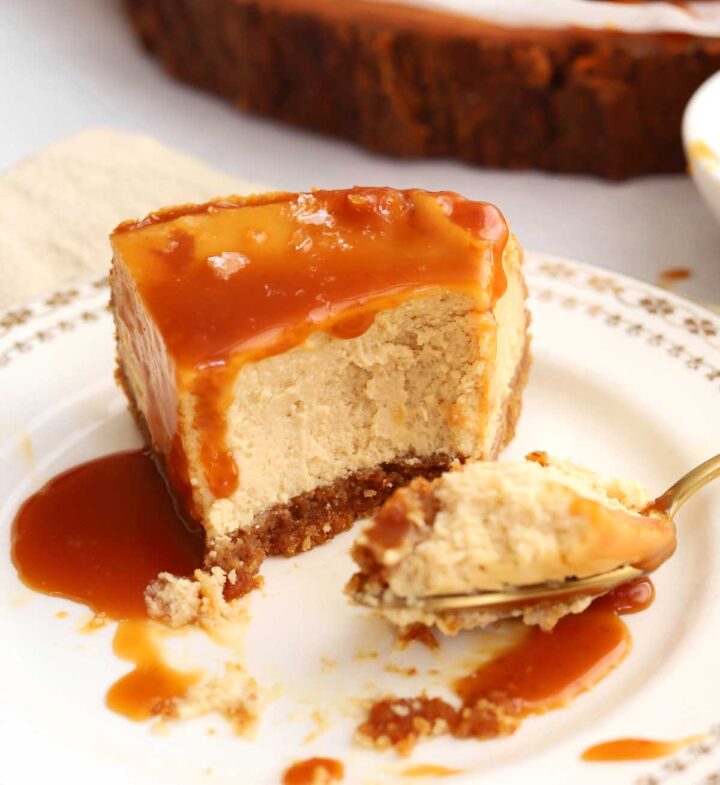
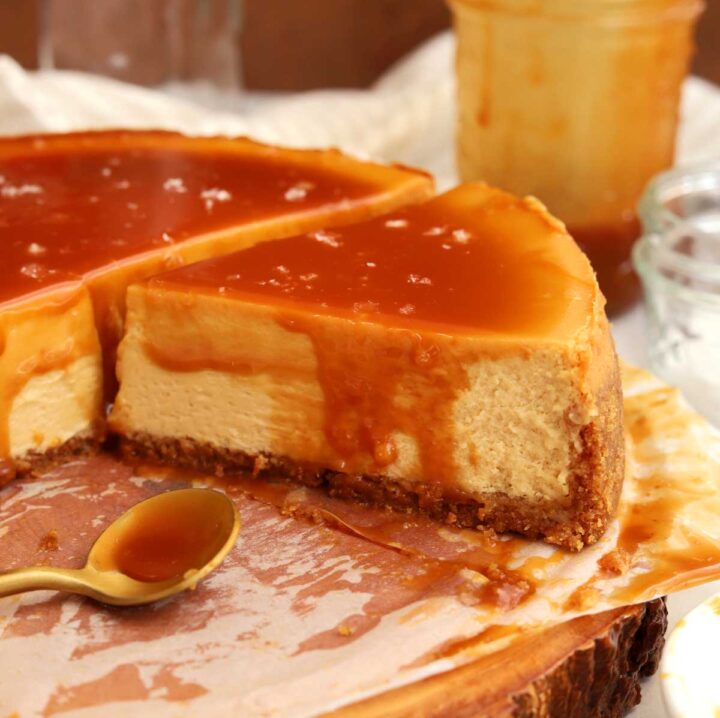
- Ultra creamy caramel cheesecake - there's caramel sauce baked right into the cheesecake filling and it is so silky and smooth that it will just melt in your mouth!
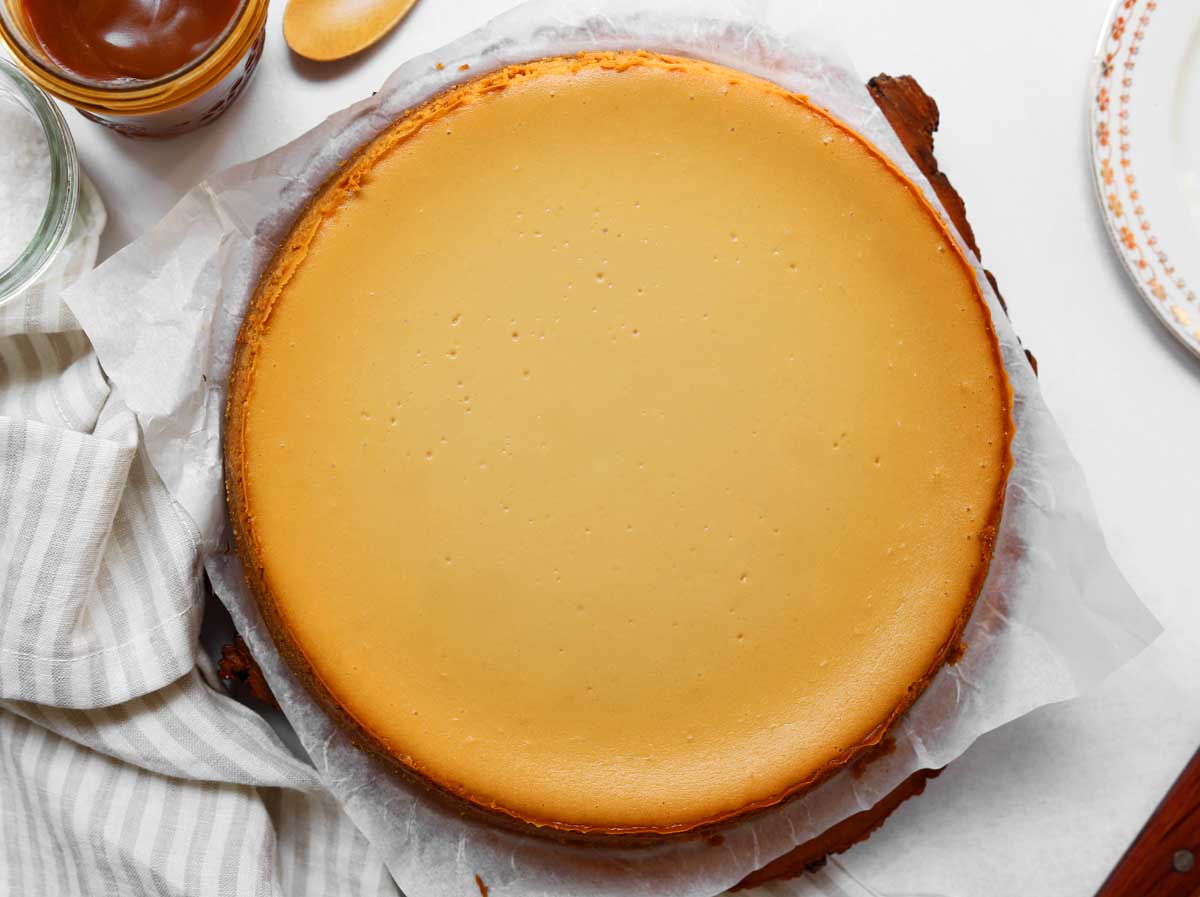
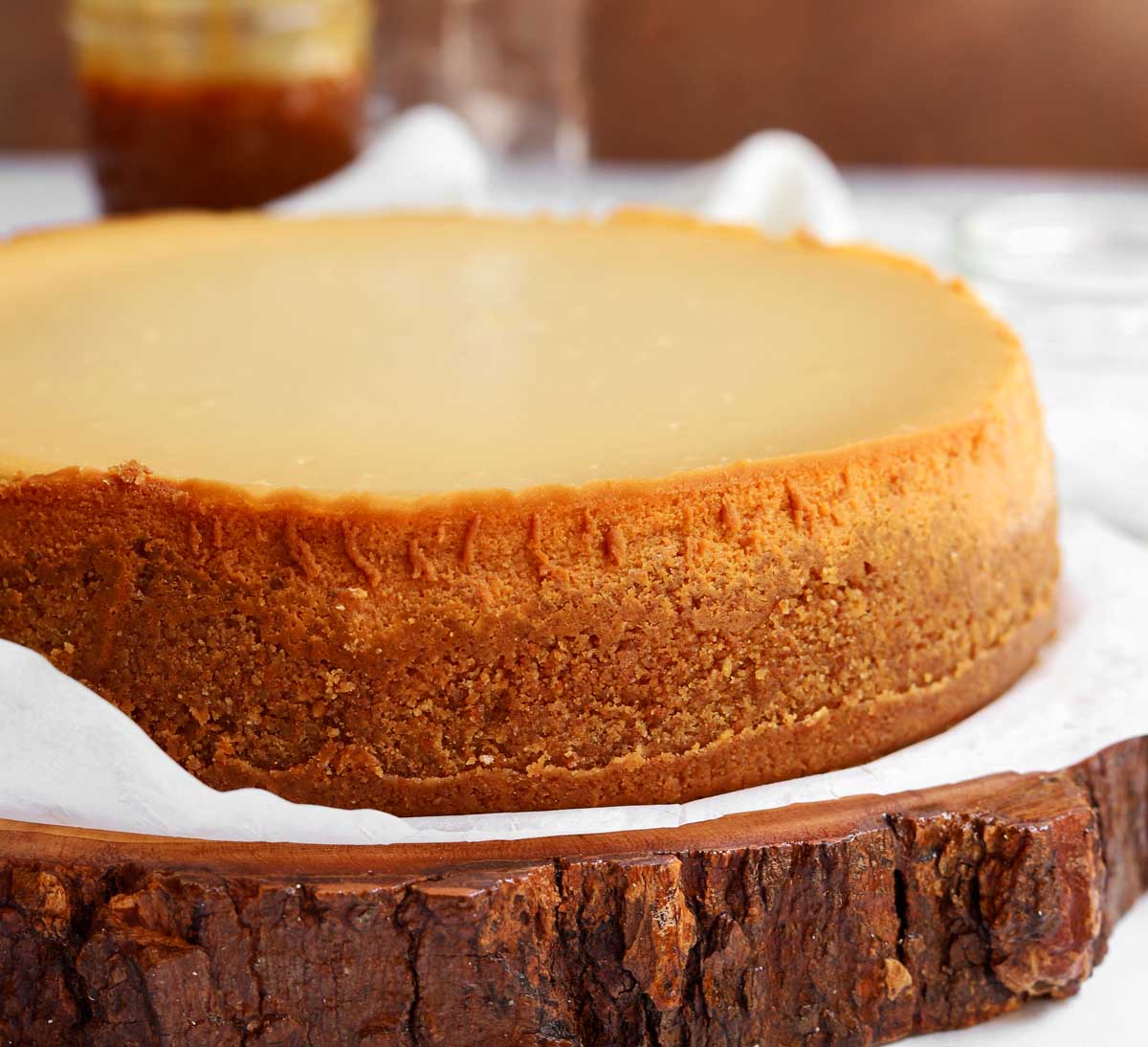
- No water bath - I don't use a traditional water bath since I know it can be frustrating if there is an accidental leak and water gets into your cheesecake. Instead I place a large tray of boiling water on the rack beneath the cheesecake in the oven as it bakes. The moist environment from the steaming water prevents cheesecake from drying out which keeps it silky, smooth and ensures no cracks.
- Not too sweet - even though there is so much caramel, you will be pleasantly surprised that this cheesecake is not too sweet! It is just perfect.
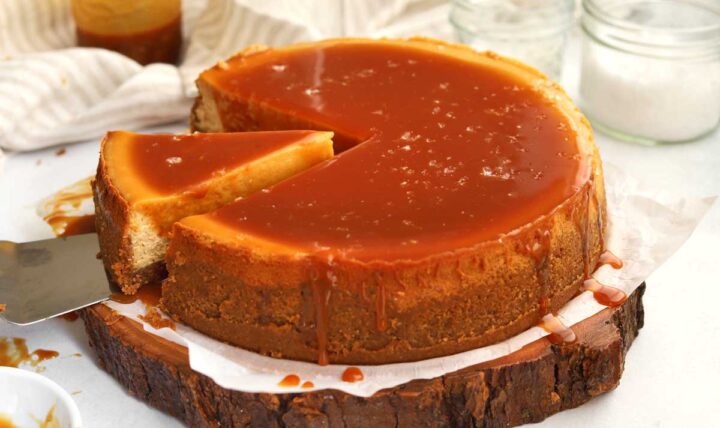
- Caramel sauce - I use my Rich Salted Caramel Sauce to pour over top and it is divine.
INGREDIENTS FOR SALTED CARAMEL CHEESECAKE
Here are some notes about the ingredients. For a full list of ingredients, check out the recipe card at the bottom of the page.
- Cream cheese - you need block cream cheese and not spreadable or whipped cream cheese to make the best cheesecake.
- Brown sugar - brown sugar contains molasses and it really enhances the caramel flavor. I use dark brown sugar for the cheesecake batter for the best flavor. Dark brown sugar has twice as much molasses compared to light brown sugar.
- Eggs - you'll use two eggs for the cheesecake.
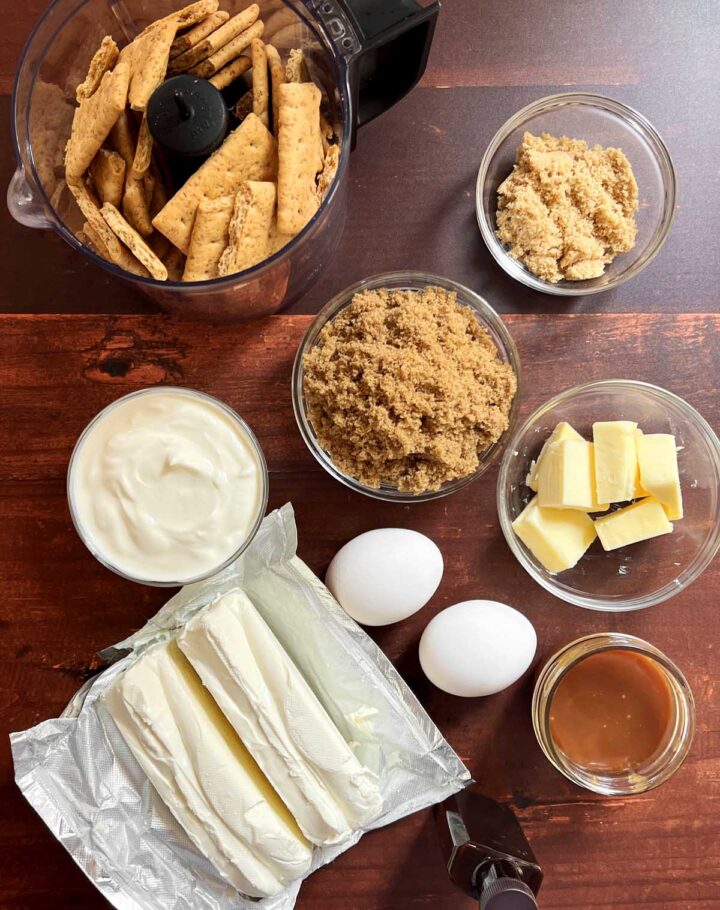
- Pure vanilla extract - vanilla is essential to enhance the caramel flavor. I like this Madagascar Bourbon Vanilla extract.
- Sour cream - full fat sour cream lightens up the cheesecake batter so it isn't too dense or heavy. It's what makes this cheesecake so creamy too!
- Salted caramel sauce - whip up a batch of my rich salted caramel sauce to use in the cheesecake filling and for topping as well.
- Flaky sea salt - it's the finishing touch and I promise it doesn't make this cheesecake taste too salty. It makes it mouth-watering!
STEP BY STEP INSTRUCTIONS: HOW TO MAKE SALTED CARAMEL CHEESECAKE
- STEP 1). Make my Rich Salted Caramel Sauce up to a week in advance and store it in a sealed jar in the fridge.
- STEP 2). Make the crust. Combine graham crumbs, brown sugar and melted butter in a medium bowl and blend until well combined. Press the crumbs firmly and evenly into the bottom and just about ½-inch up the sides of the pan. Bake for 8-10 minutes until lightly golden and feels dry.
- STEP 3). Make the filling. Mix cream cheese and sugar. Place soft cream cheese in a large bowl and mix with an electric hand mixer on medium speed until smooth and creamy. Add brown sugar and mix on medium speed for 1-2 minutes until very smooth and glossy. Stop to scrape down the sides of the bowl several times to ensure there are not lumps at this stage and everything is well combined. The mixture should be lump-free before you move on to the next step.
- STEP 4). Add sour cream and eggs. Mix in sour cream. until just combined. Add one egg and mix on medium speed until JUST combined. Scrape down the sides and bottom of the bowl, add the other egg and mix just until incorporated. Finally, mix in the salted caramel sauce and vanilla extract.
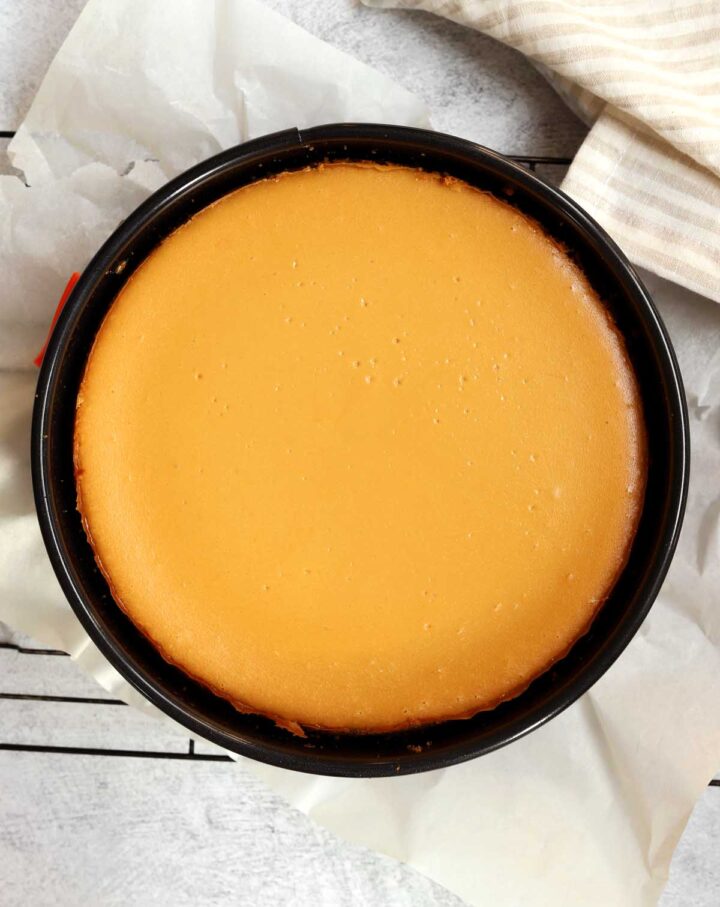
- STEP 5). Bake. Pour the batter onto the pre-baked crust (it's ok if it is still warm) and spread it out evenly. Tap the pan on the counter top 10 times and pop any air bubbles that you see rising to the surface, then use the pointed end of a knife or skewer to pop any large air bubbles that float up. Place cheesecake in the oven on the center rack. Place a large metal rimmed baking sheet or a 9×13 inch baking pan on the bottom oven rack of the preheated oven. Pour boiling water into the pan about 1 inch deep. Bake for 40 minutes. Turn the oven off and, without opening the oven door, leave it in for another 15 minutes. It is ready when the filling is set and slightly puffed around the edges, but the center is slightly wobbly or jiggles when the pan is shaken.
- STEP 6). Cool and chill. Transfer pan to a wire rack to cool. Immediately run a thin knife or small offset spatula around the edges of the cake to release it from the sides and then leave it to cool completely. Once completely cooled, refrigerate for at least 4 hours before serving. I like to leave mine overnight and serve it the next day.
- STEP 7). Top with caramel. Pour caramel sauce over the cheesecake and top with flaky sea salt just before serving. If you like the caramel to be thicker, you can refrigerate the cheesecake with the caramel layer for an hour before serving.
EXPERT BAKING TIPS FOR SALTED CARAMEL CHEESECAKE
- Start with room temperature ingredients. This is so important! Take the cream cheese out of the fridge for 2 hours prior to baking so it is soft. Also make sure your eggs are at room temperature since a cold egg will not incorporate smoothly.
- Blend the cream cheese with sugar FIRST. You need to beat the cream cheese so it is smooth, then add the sugar and beat the cream cheese with sugar thoroughly before adding the other ingredients. The sugar crystals are abrasive and will tear through the cheese and break it down so it is creamy. Sugar is also hygroscopic so it pulls the moisture from the cheese, binds it tightly and smooths it out. You'll notice that once it is well combined, it will turn glossy. This is a sign that the sugar has bound the moisture.
- Add the egg only AFTER the sugar is blended. If you add the egg before the sugar, it will most likely leave you with a lumpy batter. That's because eggs have a very high moisture content and it will be difficult to blend smoothly unless there is sugar present to bind the water.
- Do not over-mix. Over-mixing or mixing at a very high speed will incorporate too much air into the mixture. Large bubbles will cause the cheesecake to crack during baking and cooling.
- Do not over-bake. This cake needs to cook thoroughly so that the cake batter is set, but do not over-bake or the cheesecake will be dry. It should be golden on top when ready and should only jiggle just slightly - it won't jiggle a lot like plain cheesecake.
RECIPE FAQ
If you wish to make a larger cheesecake, you can multiply the ingredients by 1.5 times and bake in a 9-inch round springform pan. You will need about 10 minutes longer on the baking time.
If you can't find sour cream, you can use equal parts of full fat Greek yogurt to make the cheesecake batter.
I would generally recommend using a water bath to bake cheesecake, but sometimes it can cause issues if there is a minor tare in the foil and water happens to get in - it could ruin the cheesecake. Instead, I fill a roasting pan with boiling water and place it on the rack beneath the cheesecake in the oven to create a moist steaming environment.
If your cheesecake cracks, it could be several reasons. Overwhipping the batter, especially after the eggs are mixed in can introduce large air bubbles that will expand during baking and then collapse to cause the cheesecake to crack. If the oven is too hot then the surface can dry out to cause cracks, and if the baked cheesecake is stuck to the sides of the pan then it will crack in the center from the tension as it cools.
It's not uncommon for cheesecake to crack right down the center shortly after you pull it from the oven as it starts cooling. There are several reasons for this:
1) Large air bubbles - using electric mixers is necessary, but beating a lot of air into the batter, especially after adding the eggs, will create large air pockets that expand during baking and then contract on cooling to cause cracks.
2) Lumps in the batter - it is very important to use room temperature ingredients and blend them evenly so that the batter is emulsified and smooth before baking.
3) High and dry baking - baking at a high temperature and in a very dry environment can cause the eggs to soufflé or puff up and the surface to dry out. As the cheesecake cools and contracts, the depression of the eggs and the tension on the dry surface will cause it to crack.
4) Rapid cooling - the sharp temperature difference from the hot oven to the ambient air will cause rapid contraction as the air bubbles collapse on cooling.
HOW TO AVOID CRACKS IN CHEESECAKE
- Use room temperature ingredients. Ensure that the cream cheese, eggs and sour cream are at room temperature. Having soft cream cheese is imperative to have a smooth batter and all the ingredients will combine more smoothly and evenly if they are at room temperature. Using room temperature ingredients also means that less mixing is required to bring them together.
- Tap out large air bubbles. Once you pour the cheesecake batter into the pan over the crust, tap it on the counter top about 10 times to let large air bubbles rise to the surface and pop.
- Use a water bath. This will inevitably prevent cracks as it creates a moist, uniform cooking environment so that the eggs in the batter cook evenly and it prevents the cheesecake from drying out in the oven. A water bath helps cheesecake rise evenly and modestly so that it doesn't fall as much on cooling. However, if you follow these tips carefully and use a low oven, it isn't entirely necessary for this recipe.
- Bake at a low temperature. Cheesecake is essentially a type of custard and it requires gentle baking to create the silkiest texture and prevent the eggs from puffing up or soufflé-ing in the oven. When the eggs puff up rapidly, they aren't strong enough to sustain this amount of air and they will deflate quickly on cooling to cause cracking.
- Do not open the oven door. When you open the oven, the temperature inside reduces drastically which causes the cheesecake to bake unevenly.
- Do not over bake! An over-baked cheesecake will almost certainly crack as it dries out and the egg proteins bind too tightly.
- Release the edges. Just minutes after the cheesecake comes out of the oven, run a thin knife or small offset spatula around the edges to separate it from the springform pan. If the cheesecake sticks to the sides, then it won't be able to contract inward as it should when it cools. This causes surface tension so it splits right down the middle to relieve it. Loosening the edges will allow the cake to contract uniformly.
- Cool gently. Rapid cooling causes a drastic change in air pressure so large air bubbles will contract and the cheesecake will collapse quickly which causes tension at the surface and makes it crack.
If you love baking with pumpkin, check out these recipes!
Pumpkin Cream Cheese Muffins The Best Chewy Pumpkin Cookies Caramel Chai Pumpkin Coffee Cake Chewy Pumpkin Chocolate Chip Cookies Cinnamon Swirl Pumpkin Bread Pecan Pumpkin Streusel Muffins Pecan Pumpkin Chocolate Chip Bars Mini Caramel Pumpkin Cheesecakes Pecan Pie Pumpkin CupcakesMore cheesecake recipes:
Looking for other cheesecake recipes? Try these:


Baking with pumpkin...
Do you love baking with pumpkin? Check out these recipes:


Video
Salted Caramel Cheesecake
Ingredients
Graham cracker crust:
- 1 ½ cups (160g) graham cracker crumbs
- 2 tablespoon (30g) packed light brown sugar
- 5 tablespoon (70g) unsalted butter, melted and cooled
Caramel cheesecake batter:
- 18 oz (500g) brick cream cheese, softened
- ⅔ cup (145g) packed dark brown sugar
- ⅔ cup (160ml) full fat sour cream
- 2 large eggs at room temperature
- ⅓ cup (80ml) Rich Salted Caramel Sauce
- 1 teaspoon (5ml) pure vanilla extract
Instructions
- Make ahead: prepare my Rich Salted Caramel Sauce (larger batch option) up to a week in advance and store it in a sealed jar in the fridge.
- Preheat the oven to 350°F. Lightly grease the sides of an 8-inch round non-stick springform pan and line the bottom with a round of parchment paper.
- Make the crust. Combine graham crumbs, brown sugar and melted butter in a medium bowl and blend until well combined. Press the crumbs firmly and evenly into the bottom and just about ½-inch up the sides of the pan. Bake for 8-10 minutes until lightly golden and feels dry.
- Reduce oven temperature to 300°F.
- Make the filling. Place soft cream cheese in a large bowl and mix with a handheld electric mixer on medium speed until smooth and creamy. Add brown sugar and mix on medium speed for 1-2 minutes until very smooth and glossy. Stop to scrape down the sides of the bowl several times to ensure there are not lumps at this stage and everything is well combined. The mixture should be lump-free before you move on to the next step.
- Mix in sour cream. until just combined. Scrape down the sides and around the bottom of the bowl again and mix on low for 5 seconds to ensure everything is blended.
- Add one egg and mix on medium speed until JUST combined. Scrape down the sides and bottom of the bowl, add the other egg and mix just until incorporated. Finally, mix in the salted caramel sauce and vanilla extract.
- Pour the batter onto the pre-baked crust (it's ok if it is still warm) and spread it out evenly. Tap the pan on the counter top 10 times and pop any air bubbles that you see rising to the surface, then use the pointed end of a knife or skewer to pop any large air bubbles that float up. Place cheesecake in the oven on the center rack. Place a large metal rimmed baking sheet or a 9×13 inch baking pan on the bottom oven rack of the preheated oven. Pour boiling water into the pan about 1 inch deep. Bake for 40 minutes. Turn the oven off and, without opening the oven door, leave it in for another 15 minutes. It is ready when the filling is set and slightly puffed around the edges, but the center is slightly wobbly or jiggles when the pan is shaken.
- NOTE: if you're unsure about your oven, you can open the door to check on the cheesecake after the 35 minute mark. At this point it should look matte, slightly puffed and set around the edges about 1 ½ inches inward, and then it should be quite wobbly in the middle. If all looks well, close the door and finish baking at 350°F for the remaining 5 minutes then proceed to turn off the oven and leave it inside the slowly cooling oven for 15 minutes.
- Transfer pan to a wire rack to cool. Immediately run a thin knife or small offset spatula around the edges of the cake to release it from the sides and then leave it to cool completely.
- Once completely cooled, refrigerate for at least 4 hours before serving. I like to leave mine overnight and serve it the next day.
- Pour caramel sauce over the cheesecake and top with flaky sea salt just before serving. If you like the caramel to be thicker, you can refrigerate the cheesecake with the caramel layer for an hour before serving.


Super delicious
Super easy
Super fancy 👌 😍
Thank you Siroun!
I tested this for Thanksgiving and it is luscious! I will put it on the menu for sure.
Thank you Justine! Glad you enjoyed the recipe!
I just returned from the store in the US and all of the cream cheese blocks are 226 grams. Shrinkflation? I'm not sure if they used to be 250 grams? I'm used to checking weights but someone might not notice. I don't know if it would affect the recipe at all, to be short almost 50 grams
Hi Annmartina! Thank you, that is good to know as they are still 250g here where I live. It will affect the recipe a little, but it should still be OK. Always best to use the full weight in the recipe. I will consider the US pack sizes when developing future recipes.
I just bought a third block of cream cheese. I can use the leftovers and mix with caramel sauce for an apple dip.
I made the cheesecake for company this weekend and it was perfection. Also, one of the easiest cheesecakes I've ever made. So happy not to have to put it in a bain marie!
Thank you Annmartina! I appreciate you taking the time to provide your feedback. I'm so glad everyone enjoyed the cheesecake 🙂