
Easy Homemade Salted Caramel Sauce
If there's one recipe that you must know (next to my Perfect Shiny Crust Fudge Brownies), it's my homemade Salted Caramel Sauce Recipe! It's rich, thick and creamy, and best of all easy to make! Caramel sauce can elevate any dessert - even one you didn't make. Store-bought pound cake can be taken to the next level with a drizzle of caramel, and a pint of your favorite vanilla bean ice cream transforms into an elegant dessert. Pair that ice cream with a warm fudgy brownie and that's called HEAVEN! Make sure you watch the video at the bottom of the page to see exactly how to make it. If you're looking for recipes that incorporate caramel, try my Salted Caramel Oatmeal Chocolate Chip Cookie Bars, Caramel Apple Cake and this Turtle Cheesecake.

WHY THIS RECIPE WORKS
- Easy to make - this caramel is easy to make in one pot with basic ingredients.
- No candy thermometer recipe - you can make this recipe using a few visual cues and no candy thermometer is required.
- Creamy caramel sauce - this sauce is super smooth, thick and creamy. It has the perfect consistency for drizzling so it's ideal for serving over ice cream or drizzling over brownies.
- Rich salted caramel - salt is so important to make this caramel taste rich and with a bold flavor.

WHAT IS CARAMELIZATION?
Caramel gets its name from the chemical process that creates it - caramelization. It is a temperature-dependent non-enzymatic reaction that occurs when simple sugars are exposed to high temperatures and all of the moisture is driven off. It involves the decomposition, dehydration and degradation of sugars to form other complex compounds that have a brown color and nutty, buttery, toasty flavors.
WHAT'S THE DIFFERENCE BETWEEN WET CARAMEL AND DRY CARAMEL?
Wet caramel starts with water in the pan to help dissolve the sugar and make a very concentrated sugar syrup. This method takes longer because you need to boil it to then drive off the moisture through evaporation until the sugar becomes concentrated enough that it caramelizes. The result is a softer, more mellow-tasting caramel that has a smooth drizzling consistency.
Dry caramel involves heating sugar directly in a dry pan without water. The sugar gets much hotter initially and the caramel flavor is more intense with a slightly bitter, burnt sugar taste. The result is a very thick caramel that is great for fillings, for layering onto cookie bars or drizzling onto cookies since it sticks more.
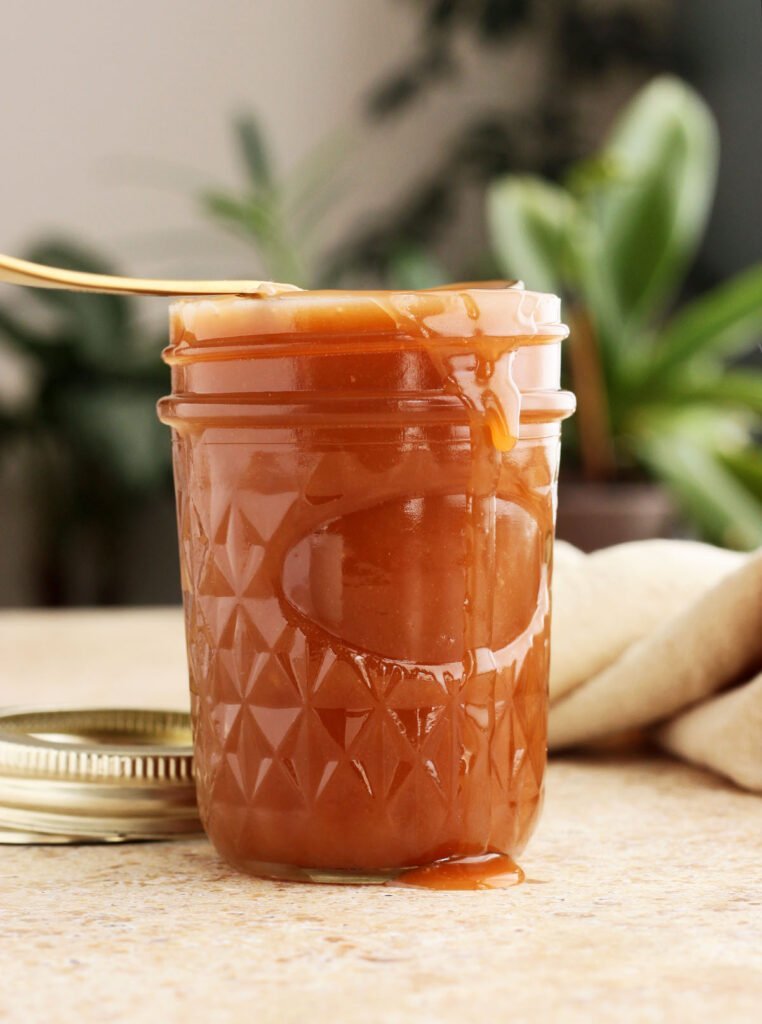
INGREDIENTS FOR EASY SALTED CARAMEL SAUCE
- Granulated sugar - simple fine white granulated sugar is the bases of caramel. During the cooking process, simple sugars transform into deep brown compounds with rich nutty taste and aroma.
- Cream - it is important to use heavy whipping cream with 35% milkfat content. The fat is important to help the sauce come together smoothly with a thick consistency.
- Butter - you can use salted or unsalted butter in this recipe. It makes the sauce extra velvety and will also let it set up with a glossy fudge-like consistency.
- Pure vanilla extract - it is nice to have good vanilla for this recipe! It's one of the main flavors so you want it to taste great. I like this Madagascar Bourbon Vanilla extract.
- Salt - you can't have salted caramel without salt! Any salt will do, but I prefer sea salt. If you use Kosher salt, note that you will need a bit more since Kosher salt is lighter than regular fine table sale.


HOW TO PREVENT CARAMEL FROM TURNING GRAINY:
- Add an invert sugar like honey, corn syrup or liquid glucose. What is invert sugar? It's a liquid sugar that contains the simple individual sugar molecules (glucose and fructose) that sucrose (granulated sugar) is made out of. When there are lots of these simple sugars floating around, it's harder for sucrose molecules to build up on themselves and crystallize. Corn syrup also contains larger sugar molecules (called oligosaccharides) which can physically interfere with sucrose molecules and prevent them from coming together and clumping.
- Add acid. Acid ingredients (like vinegar or lemon juice) can help prevent re-crystallization which causes caramel to become grainy. Acid physically breaks the bonds between the glucose and fructose molecules that form sucrose and ensure that it stays apart. By adding a little lemon juice to the sugar and then heating it, you are essentially creating invert sugar in your pan.
- Place water in the pan first, then add the sugar on top of the water. By respecting this order, the sugar dissolves more readily and evenly.
- Let sugar dissolve gently first over medium-low heat before increasing heat to boil the syrup and create caramel.

METHODS FOR MAKING CARAMEL SAUCE
There are two methods - wet caramel vs. dry caramel. This recipe today is the wet caramel version which means sugar dissolves in water before caramelizing. This slows the process so that you can control how dark you want the sauce to be. Dry caramel is cooked in a dry saucepan with no water added until it melts and caramelizes - in this method the reaction is faster and always produces a very dark caramel that has a very thick and chewy texture once cooled. This is my recipe for Dry Salted Caramel Sauce here.

STEP BY STEP INSTRUCTIONS FOR SALTED CARAMEL SAUCE
Caramel sauce is relatively easy to make once you get the hang of the technique. It's really about getting used to the transformations… like knowing how dark to cook the sugar and how often to swirl the pan so that there aren't any sugar crystals forming on the sides. Adding cream to the hot caramel sugar syrup may seem daunting at first, but once you get familiar with the fact that it bubbles up vigorously (and you get over the scare the first time), then it all starts to feel normal. It's about knowing what to expect.
- STEP 1). Add sugar to pan. Pour water into a 1- or 2-quart stainless steel saucepan with high sides and add sugar over the water.
- STEP 2). Add re-crystallization inhibitors. Add lemon juice and corn syrup or honey.
- STEP 3). Cook. Cook until the sugar dissolves, it bubbles and turns to a clear syrup. Do not stir. Continue to cook over medium-high heat until it begins to change to a golden color. Swirl the pan gently as necessary to help it cook and color evenly.
- STEP 4). Add cream and butter. When the syrup turns amber (up to the color of a copper penny), remove from heat and carefully pour in hot cream. Heating the cream will help to prevent the syrup from clumping (adding cold cream to hot caramel will cease the syrup). It will bubble up violently as the moisture from the cream immediately evaporates, so just keep back a bit. Whisk or stir until the sauce is smooth. Stir in salt, butter and vanilla.
- STEP 6). Thicken if desired. Return the pan to medium heat and simmer for 1-2 minutes until slightly thickened. Then pour it into a clean jar and let cool completely.
VOILA! - Caramel sauce a la carte It will keep in the fridge for weeks - I like to store mine in a mason jar.

EXPERT TIPS
- Prep your ingredients first. Have all of the ingredients measured and at room temperature so they are ready to go before you begin making the sauce. The process moves quickly once the sugar starts to melt and pausing for a moment to measure ingredients may mean that you'll miss the timing for the next step and the sugar will burn.
- Do not stir. Stirring can initiate re-crystallization of the sugar which can cause it to be grainy. Instead, swirl the pan gently to move the liquid syrup around and help it cook evenly.
- Heat the cream first before adding to the caramelized sugar. Adding cold cream to the very hot caramel will cause it to seize and clump. Warming the cream first will allow it to incorporate more easily.
- Make sure the pan is clean and the sugar is not contaminated.
- Use a light-bottomed 1- or 2-quart stainless steel saucepan with high sides that heats evenly. Do not use a dark colored non-stick pan because you will not be able to see the color of the sugar change.
- Cook over medium-high heat. Keeping the temperature up will ensure the sugar stays melted. The caramelization process will happen quickly, so do not walk away from the pan!
- Do not walk away. The caramelizing process proceeds very quickly once the sugar starts to turn yellow, so do not leave the pan unsupervised or it will burn.

RECIPE FAQ
Yes! You can leave out the butter and it will make a really runny caramel sauce, more like a thick syrup that's great for drizzling over ice cream.
It is not necessary to use a thermometer when making this caramel sauce. You can use simple visual cues to make it successfully. The sauce may seem thinner than you'd expect once you're done whisking everything in, but it will thicken significantly as it cools.
Caramel sauce becomes grainy if the sugar recrystallizes. This can happen when some liquid sugar syrup splashes up onto the sizes of the saucepan and immediately turn into crystals as they cool down. If this crystal touches the melted sugar in syrup, it causes a chain reaction and the sauce will seize up and become grainy.
Some recipes ask you to brush the sides of the pan with water to dissolve these crystals, but I find that can sometimes introduce other foreign matter that causes crystallization. Instead, I recommend to carefully swirl the pan and catch those crystals with hot syrup and melt them down. Use a gas stove if you have one so you can get the flame on the sides of the pan.
You can save your caramel if it clumps up after you add the cream by returning it to the heat and let it come to a boil while whisking to dissolve any clumps of sugar. If you caramel recrystallizes and turns grainy after it has cooled, then there is little you can do at that point. It likely means that there was some contamination such as a piece of dust or other particulate in the sugar that induced crystallization.

While hot off the stove, this sauce is very fluid and runny and it will thicken as it cools. When cool it has a lovely drizzling consistency that will hold up on top of ice cream. For an even thicker caramel sauce that sets to a chewy consistency for dripping over layer cakes or spooning over cheesecake, try my Rich Salted Caramel Sauce using the Dry Method.
After the caramel cools down, pour it into a glass jar or container. Refrigerate for up to 1 month. The caramel solidifies as it cools, but you can reheat in the microwave or on the stove so it's liquid again. You can freeze the salted caramel, too. Freeze in an airtight container for up to 3 months. Thaw in the refrigerator or at room temperature, then warm up before using.
This recipe makes a sauce and not a hard coating. For caramel apples, you would need to cook the sugar to a higher temperature called the "hard crack" stage so that it hardens and sets firm on the apples.
You can gently warm it up in the microwave or on the stove over low heat before using it again.

If you love caramel, check out these recipes!
Homemade Snickers Shortbread: Chocolate-Covered Caramel Shortbread Bars Molten Salted Caramel Fudge Brownies Salted Sour Cream Caramel Chocolate Tart Gingerbread Spiced Fig Crumble Bars with Salted Caramel DrizzleVideo
Easy Salted Caramel Sauce Recipe


Ingredients
- ½ cup (120ml) 35% heavy whipping cream
- 3 tablespoon (45ml) water
- 1 cup (200g) granulated sugar
- squeeze of lemon juice (optional)
- 1 teaspoon (5ml) light corn syrup or honey
- ½ teaspoon salt
- 3 tablespoon (42g) unsalted butter
- ½ teaspoon pure vanilla extract
Instructions
- Place cream in a small saucepan over medium-low heat and keep warm or warm it in the microwave.
- Add water to a 1- or 2-quart stainless steel saucepan with high sides. Add corn syrup and lemon juice, then pour in sugar over the water. Place over medium heat until it begins to bubble around the sides and sugar is mostly dissolved.
- Increase heat to medium-high and cook until it boils and turns to a clear syrup. Do not stir.
- Continue cooking at a boil, and once it starts to turn golden, swirl the pan to help it colour evenly. Using high heat is necessary to keep all of the sugar crystals melted, however you can reduce heat slightly if necessary to control the colouring. Continue to cook until it turns amber. This will take 6-8 minutes. Swirl the pan as needed to promote even cooking.
- Remove the pan from the heat and carefully add the hot cream while stirring or whisking constantly. The mixture will bubble up, so be cautious. Continue stirring to make sure there are no lumps and the caramel is well dissolved. Stir in salt, butter and vanilla extract.
- Transfer caramel sauce to a clean bowl or jar to cool completely. Cover and refrigerate for up to 3 weeks.
Do I just cook longer to thicken more
Hi Jade! For an even thicker caramel sauce that sets to a chewy consistency for dripping over layer cakes or spooning over cheesecake, try my Rich Salted Caramel Sauce using the Dry Method.
Hello from Pakistan!
I have just made salted caramel sauce and it turned put so good. Thanks for such an easy recipe.
I would like to ask how to keep it store now? In the fridge or outside?
Positive energy and prayers!
Thanks Rafia! I store mine in a mason jar in the fridge.
First time ever making caramel sauce and though my first batch did turn out a smidge burnt, I gave it a second go and it turned out great! I made it to serve with my homemade cheesecake for Easter dinner and everyone loved it! Just watch how dark you let the mixture get in the saucepan, but otherwise everything else is super easy. 🙂
Thank you Pris! Glad you enjoyed the recipe 🙂
This recipe is awesome! Made this a couple times and it’s a breeze. I used a hexclad pot 1 qt pot and was able to get the right color even though dark colored. A lighter pan is best I'm sure as stated in the instructions but that’s all i have and it worked great.
Thank you Kevin!
I love this salted caramel recipe. It is really easy. As it was bubbling on the stove I could smell the honey. I use it in recipes and on ice cream. It's delectably delicious.
Thank you Cindy! Glad you enjoy this recipe 🙂
Best caramel sauce I’ve ever made. I slightly burned the first batch - it takes awhile to turn amber but then turns from amber to burnt quickly! Thanks for my new go-to caramel sauce recipe!
I'm so glad you like it. Thanks Becky!