
Salted Caramel Sauce - the Dry Method
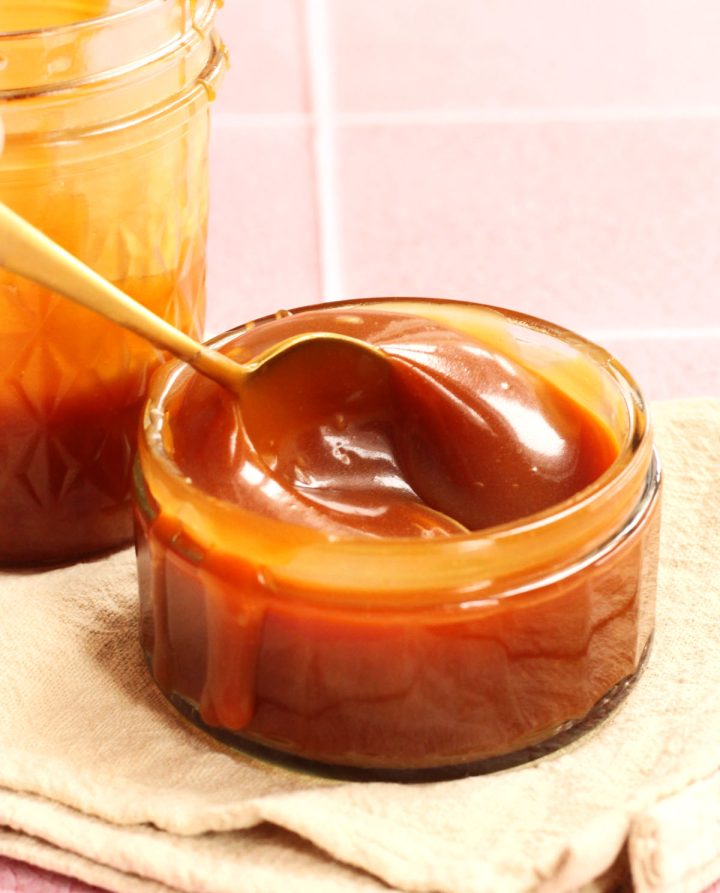
If there's one recipe that every aspiring baker should learn to master (next to my Perfect Shiny Crust Fudge Brownies), it's homemade Salted Caramel Sauce! This recipe for Salted Caramel Sauce uses the dry method (read more on that below!) is thick, rich and creamy with bold flavor. It is extremely versatile and can enhance any dessert, from topping ice cream, drizzling over my Caramel Apple Cookies or making the filling for my Snickers Brownies. You can use caramel sauce anywhere and it will taste great! In this article I break down the science of caramel and how to make it. If you would like to know how to make caramel sauce using the wet method, check out my Easy Homemade Salted Caramel Sauce Recipe.

WHY THIS RECIPE WORKS
- Easy to make - this caramel is easy to make in one pot with basic ingredients.
- Only 4 ingredients! - you only need sugar, cream, butter and salt to make caramel sauce! You can also add vanilla extract, but it is optional.
- No candy thermometer recipe - you can make this recipe using a few visual cues and no candy thermometer is required.
- Thick creamy caramel sauce - this sauce is super smooth, thick and creamy. It's perfect for serving over ice cream or using it as a filling for cakes and pastries.
- Rich salted caramel - salt is so important to make this caramel taste rich and with a bold flavor. The dry method makes a caramel sauce with a very rich taste and dark amber color.
- Small batch - this recipe makes 1 cup of caramel sauce so it doesn't use a lot of ingredients. If you want to make a larger batch, just double the proportions of everything and use a slightly larger pot so that it doesn't bubble over when you add the cream.

INGREDIENTS
- Granulated sugar - simple fine white granulated sugar is the bases of caramel. During the cooking process, simple sugars transform into deep brown compounds with rich nutty taste and aroma.
- Cream - it is important to use heavy whipping cream with 35% milkfat content. The fat is important to help the sauce come together smoothly with a thick consistency.
- Butter - you can use salted or unsalted butter in this recipe. It makes the sauce extra velvety and will also let it set up with a glossy fudge-like consistency. If you use salted butter, it will obviously taste slightly saltier.
- Salt - you can't have salted caramel without salt! Any salt will do, but I prefer sea salt. If you use Kosher salt, note that you will need almost twice as much more since Kosher salt is less dense (lighter) than regular fine table sale.
- Pure vanilla extract - vanilla is completely optional in caramel sauce, but it does add nice flavor. I like this Madagascar Bourbon Vanilla extract.
HOW TO PREVENT CARAMEL FROM TURNING GRAINY:
- Use a clean pan - make sure that the pan you are making caramel sauce in is very clean and free of dust or debris. Dust particles can initiate nucleation of the sugar crystals.
- Use a 1-quart stainless steel saucepan. Stainless steel will help you see the color changing to gauge when it is ready. If you use a pan with a dark non-stick coating, it will be hard to see the color change.
- Do not contaminate your sugar. If your sugar canister or storage bin has been contaminated with anything (for example, you scooped some flour for a recipe and then used the same scoop for the sugar, thus getting flour in the sugar...) then these particles can cause nucleation of the sugar crystals.
- Do not let sugar granules touch the sides of the pan. If dry sugar crystals hit the sides of the pan where there is no consistent heat or it's not hot enough, then they may melt quickly and then recrystallize and act as a seed that will trigger re-crystallization of the melted sugar in the pan.
- Use high heat - high heat will ensure that the sugar stays in its melted liquid form.
- Warm the cream - cold cream will shock the hot sugar syrup and can cause it to seize up quickly and leave you with clumps of sugar. Warm cream will help the emulsion come together smoothly. Adding cold cream to boiling hot sugar will also shock the cream and cause the dairy proteins to curdle.
- Do not scrape the bottom of the pan. As you pour out the caramel sauce, the bottom of the pan is still hot and the thin film can over-heat and cause the rest of the sauce to turn grainy if you scrape it in.

METHODS FOR MAKING CARAMEL SAUCE
There are two methods - wet caramel vs. dry caramel. This recipe today is the dry caramel version which means sugar melts over direct heat in a dry saucepan as opposed to dissolving sugar first in water to create a syrup before caramelizing. This method seems daunting as the sugar clumps initially, but then as it gets hot enough it will all melt into an amber syrup. In this method the reaction is faster and always produces a very dark rich and thick caramel.
STEP BY STEP INSTRUCTIONS FOR SALTED CARAMEL SAUCE:
- STEP 1). Add sugar to pan. Pour sugar in an even layer in a 1-quart heavy-bottomed stainless steel saucepan (preferably with a wide base).
- STEP 2). Melt the sugar. Place the pan over medium-high heat and let the sugar melt. As you see the crystals around the sides of the pan melt and liquefy, use a wooden spoon to push sugar from the edges to the centre and then push the unmelted sugar from the centre out to the sides to help it melt evenly. Continue to move the sugar like this until it begins to turn golden and liquefy. It will clump up and look dry before it liquefies.
- STEP 3). Cook. Continue to stir gently until it all melts and transforms into a clear amber syrup and use the wooden spoon or heat-resistant silicone spatula to press out any large lumps of sugar. Reduce the heat slightly if necessary to control the cooking process and prevent the syrup from getting too dark before all of the sugar lumps melt completely. NOTE: All of the sugar must be melted before proceeding to the next step.
- STEP 4). Add butter and cream. Once it is copper-colored and lump-free, remove from heat and carefully whisk in butter. The mixture will bubble up like lava, so be cautious. Slowly pour in the cream, then whisk until smooth.
- STEP 5). Add salt. Mix in salt immediately after the cream.
- STEP 6). Heat to melt any extraneous lumps of sugar. If you still feel some hard bits of sugar along the base of the pan, return the pan to medium heat and cook while stirring just until melted.
- STEP 7). Cool and store. Pour the sauce into a heatproof jar and let cool at room temperature before storing in the fridge.

EXPERT TIPS
- Make sure the pan is clean and the sugar is not contaminated.
- Use a light-bottomed, heavy gauge stainless steal pan that heats evenly. Do not use a dark colored non-stick pan because you will not be able to see the color of the sugar change. A heavy gauge pan will hold the heat and heat evenly so that you don't have hot spots during cooking where the sugar can cook an burn faster in one are vs. another in the pan.
- Move and push the sugar. I recommend that you watch the video to see how I make this recipe. I use a silicone spatula to push the sugar across the bottom of the pan instead of stirring. Stirring can cause sugar to jump up and hit the sides of the pan. When sugar crystals hit the sides of the pan, they will melt and then cool quickly and crystalize which can cause a chain reaction and initiate re-crystallization of the rest of the sugar which can cause it to be grainy.
- Cook over medium-high heat. Keeping the temperature up will ensure the sugar stays melted. The caramelization process will happen quickly, so do not walk away from the pan! I prefer a gas stove because you can control the temperature more quickly and it is more intense heat to melt the sugar, but if you have an electric stove then I would recommend using higher heat to ensure that it melts the sugar quickly at the initial stages, then reduce the heat to control the cooking once it is all melted.
- Try to avoid sugar crystals from building up on your spoon or spatula. Any unmelted sugar crystals on your spoon or spatula will cause the liquified caramel to re-crystalize so either ensure that it doesn't build up, or switch to a new spoon or wire whisk to stir in the butter and cream.
- Heat the cream first before adding to the caramelized sugar. Adding cold cream to the very hot caramel will cause it to seize and clump. Warming the cream first will allow it to incorporate more easily. I just heat it up in the microwave in a heatproof jug. Adding cold cream to boiling hot sugar would also shock the cream and cause the dairy proteins to curdle.
- Add the salt immediately after adding the cream. It is important to mix the salt in well and add it soon after the cream so that it dissolves evenly. Otherwise it might not mix in uniformly and leave you with salty pockets.
- Do not walk away! Caramel transforms slowly at first and then very quickly near the end as majority of the sugar melts. Do not lose patience and continue to hover over the pan to control the cooking.

FAQ
Yes! You can leave out the butter and it will make a really runny caramel sauce, more like a thick syrup that's perfect for drizzling over ice cream.
Caramel sauce becomes grainy if the sugar recrystallizes. This can happen when some liquid sugar syrup splashes up onto the sizes of the saucepan and immediately turn into crystals as they cool down. If this crystal touches the melted sugar in syrup, it causes a chain reaction and the sauce will seize up and become grainy.
Some recipes ask you to brush the sides of the pan with water to dissolve crystals that form on the sides of the pan, but I find that it can sometimes introduce other foreign matter that causes crystallization. Instead, I recommend to carefully swirl the pan and catch those crystals with hot syrup and melt them down. Use a gas stove if you have one so you can get the flame on the sides of the pan. Ensure that the caramelized (amber) sugar syrup is completely clear and free of lumps before adding the butter and cream.
You can save your caramel if it clumps up after you add the cream by returning it to the heat and let it come to a boil while whisking to dissolve any clumps of sugar. If you caramel recrystallizes and turns grainy after it has cooled, then there is little you can do at that point. It likely means that there was some contamination such as a piece of dust or other particulate in the sugar that induced crystallization.
Invert sugar is a liquid sugar that contains the simple individual sugar molecules (glucose and fructose) that sucrose (granulated sugar) is made out of. When there are lots of these simple sugars floating around, it's harder for sucrose molecules to build up on themselves and crystallize. Corn syrup also contains larger sugar molecules (called oligosaccharides) which can physically interfere with sucrose molecules and prevent them from coming together and clumping.
STORING AND FREEZING
How to store salted caramel sauce?
Let the caramel cool completely in the jar at room temperature with the lid off. If you cover it, it will create condensation as the steam condensed on the lid. After the caramel cools down, refrigerate for up to 1 month. The caramel solidifies as it cools, but you can reheat in the microwave or on the stove so it's liquid again.
Can I freeze salted caramel sauce?
Yes, you can freeze salted caramel sauce. Store it in an airtight container for up to 3 months in the freezer. Thaw in the refrigerator and then warm up gently and stir well before using.
More caramel!
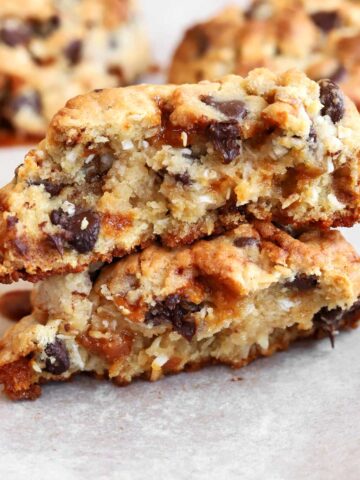
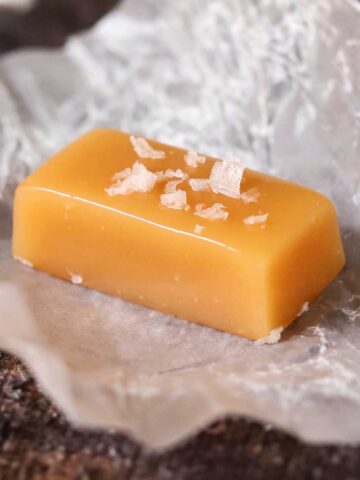
Do you love caramel? Check out these recipes that use caramel sauce:
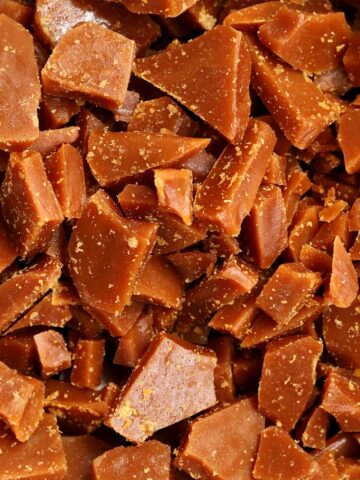
Caramel's best friend...
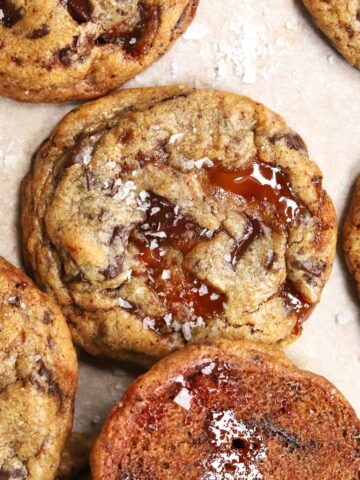
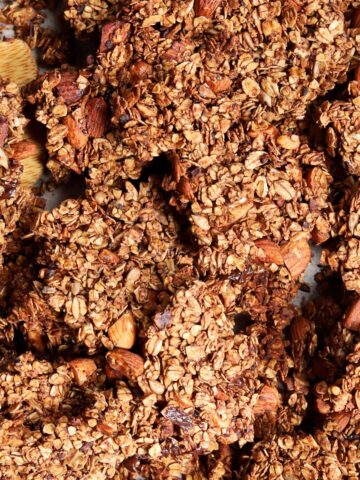
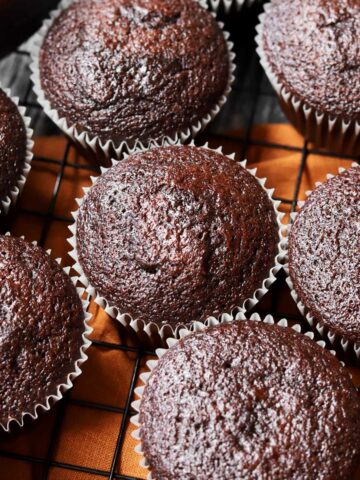
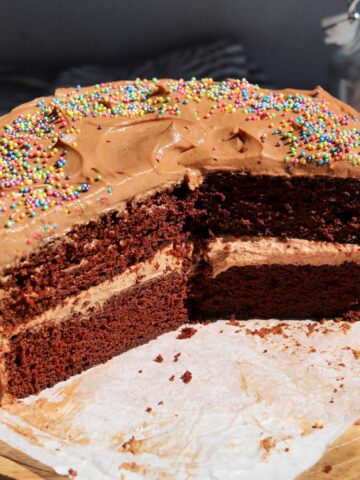
Chocolate is caramel's best friend. Here are some delicious chocolate recipes:
Video
Salted Caramel Sauce - the Dry Method

Ingredients
Small Batch
- ⅓ cup (80ml) 35% whipping cream
- ¾ cup (150g) granulated sugar
- 3 tablespoon (42g) unsalted butter
- ¼ teaspoon fine table salt
- ½ tsp pure vanilla extract optional
Larger Batch
- ½ cup (120ml) 35% whipping cream
- 1 cup (200g) granulated sugar
- ¼ cup (56g) unsalted butter
- ½ teaspoon fine table salt
- ½ teaspoon pure vanilla extract optional
Instructions
- First warm up the cream. Place the cream in a heatproof measuring jug and warm it in the microwave so it is warm to the touch. It doesn't need to boil.
- Pour sugar in an even layer in a 1- or 2-quart stainless steel saucepan (preferably with a wide base). Place the pan over medium-high heat and let the sugar melt.
- As you see the sugar crystals around the sides of the pan start melt, turn golden and liquefy, use a wooden spoon or heat resistant silicone spatula to push sugar from the edges to the centre of the pan and then push the unmelted sugar from the centre out to the sides to help it melt evenly. Continue to move the sugar like this until it all begins to turn golden and liquefy. It will clump up and look dry before it liquefies, but trust that it will once it all gets uniformly hot enough to melt entirely.
- Continue to move the sugar gently until it all melts and transforms into a clear amber syrup and use the wooden spoon to press out any large lumps of sugar. Reduce the heat slightly if necessary to control the cooking process and prevent the syrup from getting too dark before all of the sugar lumps melt completely. Do not add the butter until there are absolutely no lumps of sugar or else the caramel will turn grainy once it cools.
- Once it is copper-colored and lump-free, remove from heat and carefully whisk in butter. The mixture will bubble up like lava, so be cautious.
- Slowly pour in the warm cream, then whisk until smooth. Mix in salt. If you still feel some hard bits of sugar along the base of the pan, return the pan to medium heat and cook while stirring just until melted. Stir in vanilla if you choose to use it. Pour the sauce into a heatproof jar and let cool at room temperature before storing in the fridge.


Yet another excellent recipe! I made it in advance to drizzle on a Chuy’s copycat tres leche cake I am making tomorrow. I tested it on some vanilla ice cream and it was absolutely delicious! Thank you so much for bringing us another well tested recipe. Well written and super tasty!
You are welcome Judy! Thanks for the feedback 🙂
Could you tell me what to what temperature you cook the caramel? Thank you.
Hi Rachel! Cook the sugar to 330F, before adding butter and cream.
In your easy salted caramel "wet" method recipe you use lemon juice and corn syrup to aid in texture. Can/should those be worked in here to help resist grittiness? Or because it's anhydrous until the butter/cream are added is it impossible?
Delicious
Thanks Meliseth!
Hi Christina! I can't wait to try this recipe on your salted caramel cheese cake. A quick question though, you did not list the two yields separately. Is one cup the larger batch or smaller?
Hi Steve! The larger batch 1 cup. I would recommend making the larger batch for the cheesecake.
Doesn't the butter need to be room temperature?
Hi Cayla. No, it does not need to be room temperature.
Holy crap on a cracker that's delicious!
Thanks Michelle! LOL
I found your recipe by searching 'small batch dry caramel', so thank you for including a smaller recipe. My caramel came out amazing.
Thank you Ashlie! I'm so glad the recipe worked well for you 🙂
I love this recipe, but I have 2 questions. Can I use margarine instead of butter, and can I use powdered creamer that has been reconstituted to liquid creamer?
Thanks,
Maria
What would the shelf life be on this recipe?
I’m so glad I found this recipe! I didn’t think caramel sauce could be this easy but your video and explanations really helped.
Can I veganise this? Use coconut cream?
I haven't tried with vegan butter. I think it might split because the fat content and types of fats are different.
I have made it with coconut cream. Full fat and thick from the top of a can of cocnut milk. It works well. You can leave the butter out entirely or add vegan margarine. It does not get as thick but it's still tasty and a beautiful colour.
Thanks Helen! Good to know!
I have made wonderful caramel sauce using Violife vegan butter and Country Crock Vegan Whipping Cream instead of real butter and cream. The vegan whipping cream is particularly nice as it is thick, creamy, and in my opinion indistinguishable from real cream. I have tried using coconut cream for many recipes (especially homemade vegan ice cream) but I really don't like the overpowering taste of coconut you get using it. The Country Crock cream just tastes exactly like real cream!
Thanks for sharing Deborah!
awesome caramel sauce recipe. Work well and was easy enough to make.
I tried the recipe yesterday and I am very pleased with how it turned out. I'm going to use it to make your Snickers Brownies!
This has become my go-to caramel sauce recipe. It is really easy even though I thought it would be hard and it makes just the right amount. Thanks so much!
Thanks Tori, I'm glad you tried it and now you can make your own caramel!
I was so nervous to make it and it ended up turning out so well and it was so easy! I can’t wait to use it for so many recipes now.
This is sooooo good… super easy and super duper yummylicious
Thanks Neha!
This is my absolute favorite way to make caramel sauce. It is delicious and easy once you understand the technique - which you have described so perfectly. Thank you Christina!! ☺️
Thank you so much Tricia! I'm glad it's helpful for you!
People want more of that I would make more and more to sell it to friends and families members and in my future would make it and my company to
I watched your video and followed the instructions and the sauce is so glossy and thick. I'm going to use it to drizzle over cupcakes. Thanks!
I love it, but I made it ahead of time and it was too sticky/hard to drizzle…. How do I keep it creamy?!
I love this technique! I've made your wet caramel sauce recipe, and now I've tried this one... I think I like this one even better!