
Homemade Soft Caramels
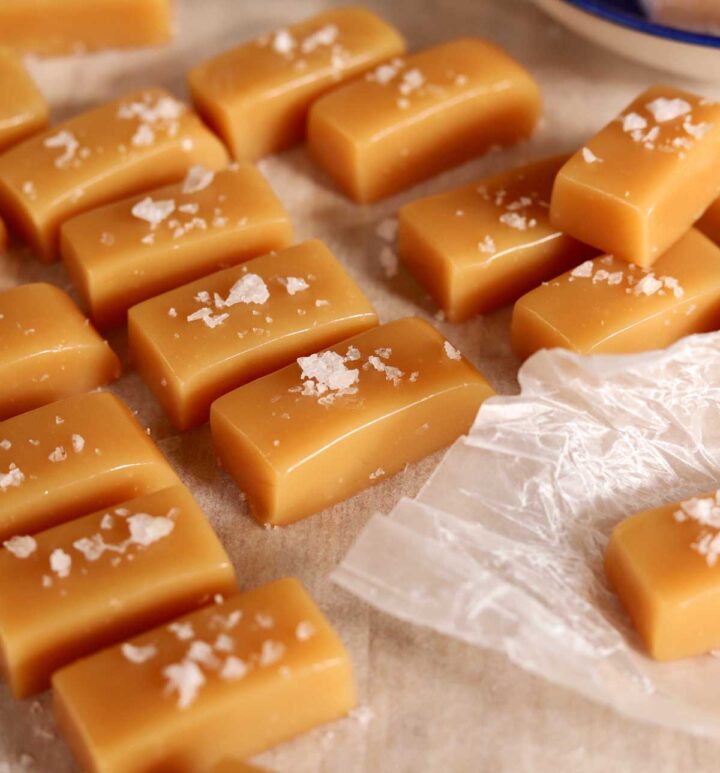
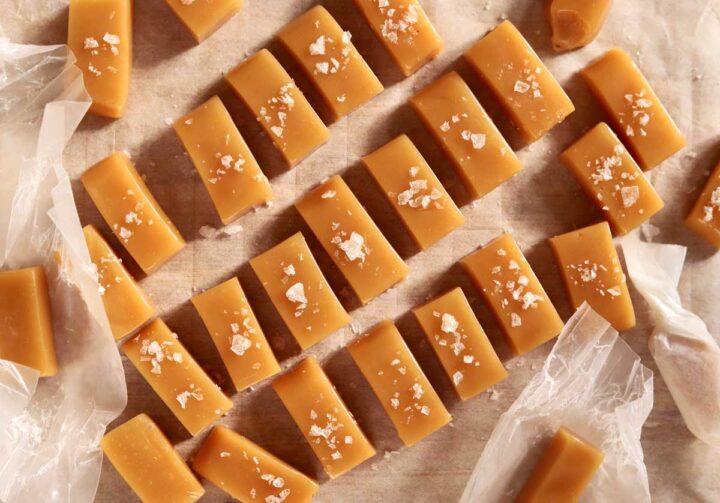
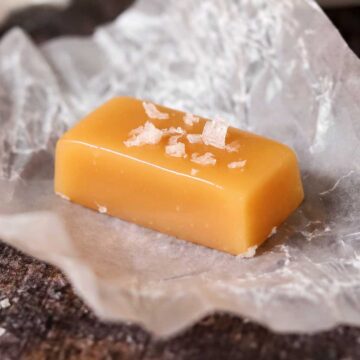
You won't believe how easy it is to make soft caramel candy from scratch with simple ingredients. This recipe for Homemade Soft Caramels comes together in under 15 minutes on the stovetop and they have a soft, chewy texture with a creamy and buttery flavor. It's a classic style of caramels with a smooth flavor similar to Werther's Original candies. I make so many batches of these over the holidays for gifting. They make beautiful, thoughtful homemade gifts all wrapped individually in a sealed jar with a bow. Everyone loves them and they store really well so this is a great make-ahead treat too. If you enjoy making candy from scratch, try my Homemade Toffee and easy Chocolate Truffles.
WHY THIS RECIPE WORKS
- Easy to make - you only need a few basic ingredients such as butter, cream, sugar and corn syrup or honey to make delicious homemade caramels. The method is simple because you add all ingredients to one pot and boil away.
- No candy thermometer recipe - I recommend using a candy thermometer to simplify the process, however you can also make these using the cold water test and visual cues for the firm ball stage. See the video tutorial for the texture you are looking for.
- Creamy buttery caramels - these homemade caramel candies taste way better than anything you can buy at the store with fresh butter and cream. They have smooth, mellow caramel flavor with pronounced creaminess.
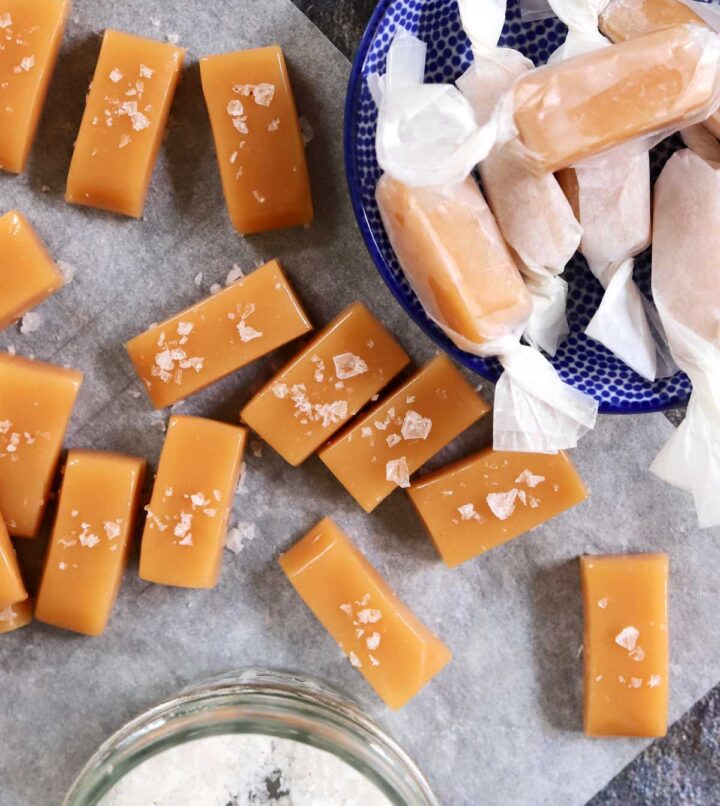
- Flaky sea salt - salt is so important to make this caramel taste rich. Salted caramel is the only kind of caramel in my mind and there's salt during the candy-making process and also added on top.
WHAT IS CARAMEL?
Caramel gets its name from the chemical process that creates it - caramelization. It is a temperature-dependent non-enzymatic reaction that occurs when simple sugars are exposed to high temperatures and all of the moisture is driven off. It involves the decomposition, dehydration and degradation of sugars to form other complex compounds that have a brown color and nutty, buttery, toasty flavors. Soft caramels are made from a simple syrup of sugar, cream, butter and liquid sugar like glucose or corn syrup. The flavor comes from both caramelization and Maillard Browning which is a delicious reaction between milk proteins and sugars.
WHAT'S THE DIFFERENCE BETWEEN SOFT CARAMEL AND HARD CARAMEL?
The main difference between soft caramel and hard caramel is the final temperature that you cook it to. Soft caramel comes from a rich syrup that is cooked to the "soft ball" or "firm ball" stage which is between 235-248 degrees F. Hard caramel candy and butterscotch is cooked for longer until it reaches the "soft crack stage" between 270-290 degrees F, such as Werther's original wrapped candies.
WHAT ARE THE STAGES OF CANDY MAKING?
Making candy involves cooking sugar syrup to various temperature depending on the desired outcome. The texture of the final candy depends on how concentrated the sugar is. This relates to temperature because the boiling point of a solution is directly related to its concentration of solids, therefore the hotter a syrup gets, the more concentrated it is.
- Thread Stage - between 230° and 234°F, the candy syrup forms a thin thread in the water and does not form a ball. This is used for concentrated syrups and jellies.
- Soft Ball Stage - between 235°and 241°F, the candy syrup forms a soft pliable ball that slowly flattens when removed from the cold water. Use this temperature for making fudge, fondant and pralines.
- Firm Ball Stage - between 242 and 248°F, the candy syrup forms a firm pliable ball that hold shape but flattens when squeezed. Use this temperature for making soft caramels like this recipe on this page.
- Hard Ball Stage - between 250° and 265°F the candy syrup forms thick threads when it drips from the spoon, or hardens into a ball if gathered and compacted. Use this temperature for making nougat and rock candy.
- Soft Crack Stage - between 270° and 290°F, the candy syrup forms flexible, pliable threads when it drips from a spoon, and once cool it will bend and break. Use this temperature for making taffy, butterscotch and to coat candy apples.
- Hard Crack Stage - between 295° and 310°F. syrup forms hard, brittle strands that easily break. Use this temperature for making butter toffee, lollipops and peanut brittle.
WHAT IS THE COLD WATER TEST?
Candy-making involves cooking sugar syrup to various degrees of concentration depending on what texture the final candy is meant to have. Using the cold water test is a method for checking the sugar concentration before thermometers were available. It is a way of determining if the candy mixture has reached the correct consistency for doneness without using a candy thermometer. To perform the cold water test, drop a small amount of the hot candy mixture off a teaspoon into a small bowl of cold water and check for changes in consistency. Soft textured candies come from a syrup that forms a pliable or hard ball in cold water, while hard candies form pliable or brittle threads.
WHAT IS THE FIRM BALL STAGE?
Firm ball stage is the stage of candy-making where when you drop a bit of the candy syrup into a bowl of cold water, it forms a firm (but not hard) ball that is pliable and will flatten with some pressure when squeezed in your fingers.
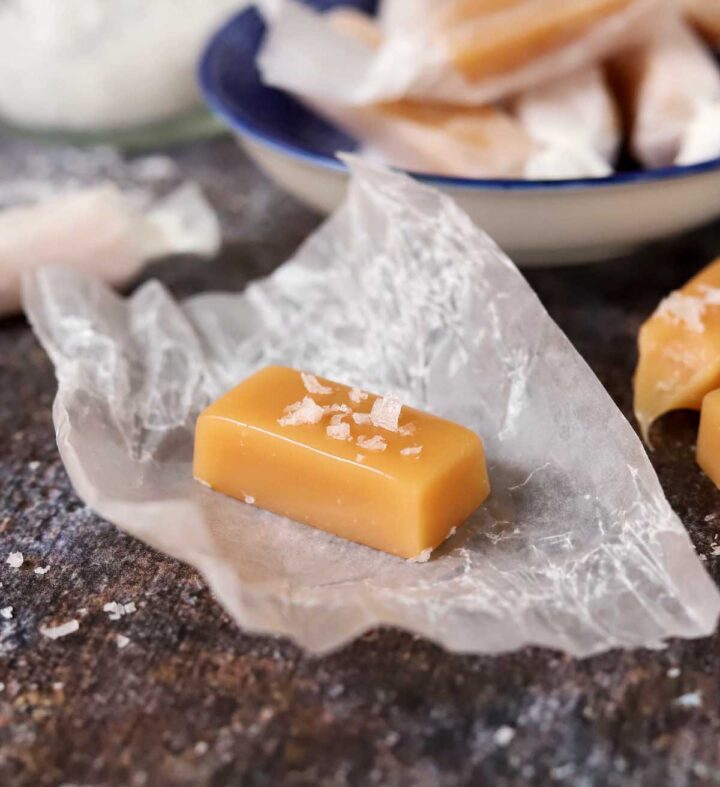
INGREDIENTS FOR CARAMEL CANDIES
- Granulated sugar - simple fine white granulated sugar is the bases of caramel. During the cooking process, simple sugars transform into deep brown compounds with rich nutty taste and aroma.
- Cream - it is important to use heavy whipping cream with 35% milkfat content. The fat is important to make candies soft and short in texture instead of super sticky.
- Butter - you can use salted or unsalted butter in this recipe. It gives a rich flavor, balances the sweetness and makes these candies soft without being sticky.
- Corn syrup - you can use light or golden corn syrup and it is really important to prevent the sugars from recrystallizing and keeping the caramels soft. You can also use honey which is delicious, but note that they will taste distinctly of honey in this case.
- Pure vanilla extract - it is nice to have good vanilla for this recipe! It's one of the main flavors so you want it to taste great. I like this Madagascar Bourbon Vanilla extract.
- Salt - you can't have salted caramel without salt! Any salt will do, but I prefer flaky sea salt.
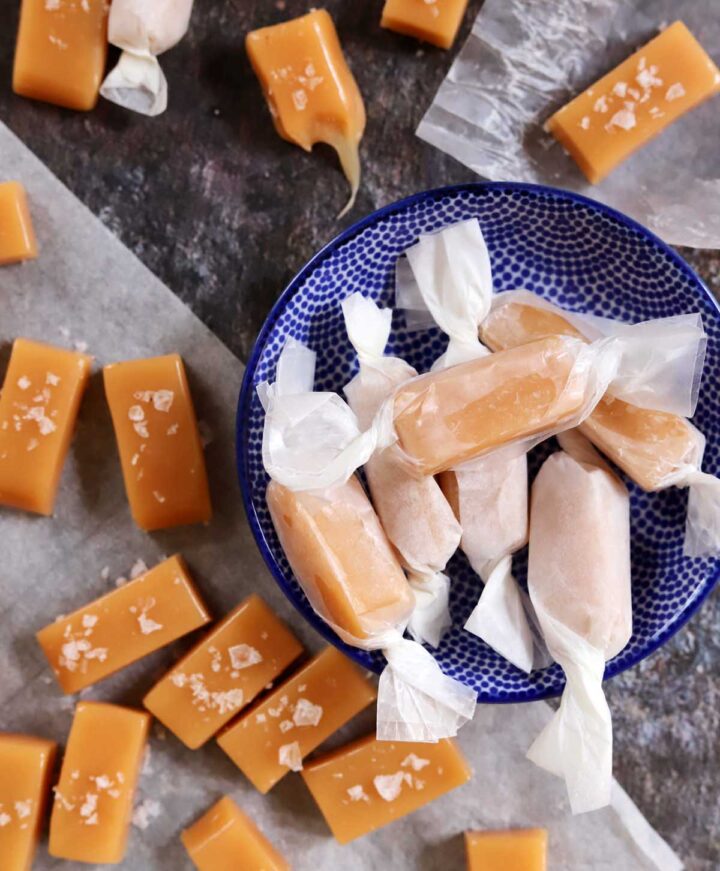
HOW TO PREVENT CARAMEL FROM TURNING GRAINY
- Use an invert sugar like honey, corn syrup or liquid glucose. What is invert sugar? It's a liquid sugar that contains the simple individual sugar molecules (glucose and fructose) that sucrose (granulated sugar) is made out of. When there are lots of these simple sugars floating around, it's harder for sucrose molecules to build up on themselves and crystallize. Corn syrup also contains larger sugar molecules (called oligosaccharides) which can physically interfere with sucrose molecules and prevent them from coming together and clumping.
- Avoid introducing outside contaminants or debris. Large pieces of dust or debris that might make it into the syrup from contamination of sugar or externally introduced from your spatula may accelerate crystallization.
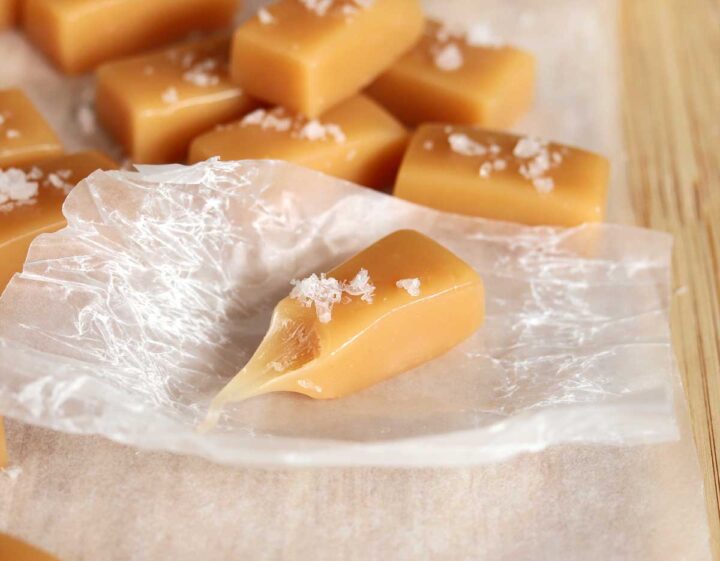
STEP BY STEP INSTRUCTIONS (watch the recipe video above for a step-by-step tutorial)
- STEP 1). Combine cream, corn syrup, sugar and 1 tablespoon of butter in a heavy-bottomed 2 or 3-quart saucepan with high sides over medium-low heat. Stir constantly until sugar is dissolved. Increase heat slightly, bring the mixture to a boil and clip a candy thermometer to side of pan. Continue to cook over medium to medium-low heat, stirring very frequently, until mixture reaches 235°F. Reduce heat slightly and continue to cook while stirring constantly until it reaches 246-248°F, about 15-20 minutes total cooking time. Stay close as the syrup will cook very quickly at this point - if the phone rings, don't answer it!
- STEP 2). Remove pan from heat, and quickly stir in remaining 1 tablespoons of butter, vanilla extract and table salt until melted and smooth. Immediately pour into prepared pan, without scraping the bottom of the pot. Let stand at room temperature without moving until completely cooled and set, about 3-4 hours.
- STEP 3). Pull up parchment to unmold cooled caramel, and invert onto a clean work surface. Peel off parchment. Use kitchen shears or a lightly oiled sharp long-bladed knife to cut the slab into ½-inch strips and then cut each strip into 1-inch pieces. I slice the slab widthwise into 15 4-inch strips, then slice those strips into 3 pieces to yield
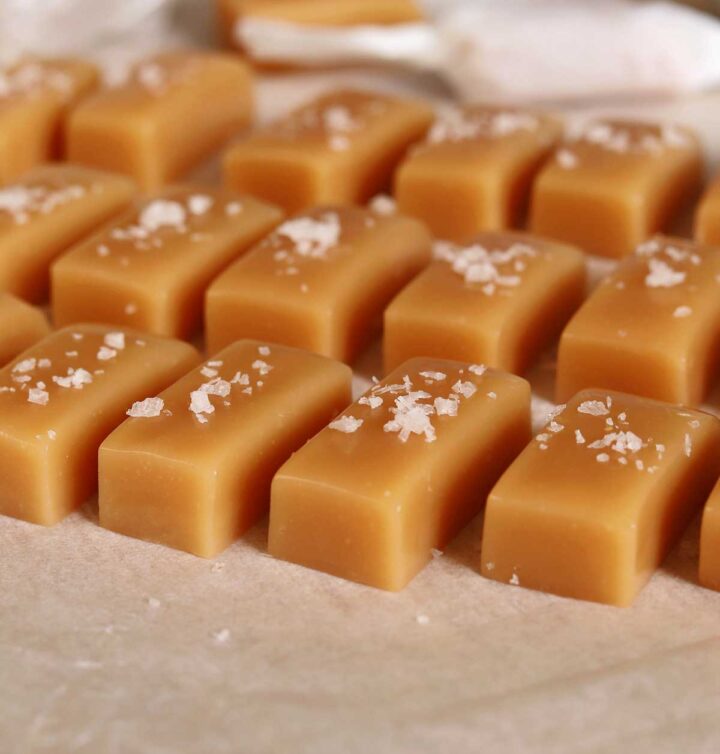
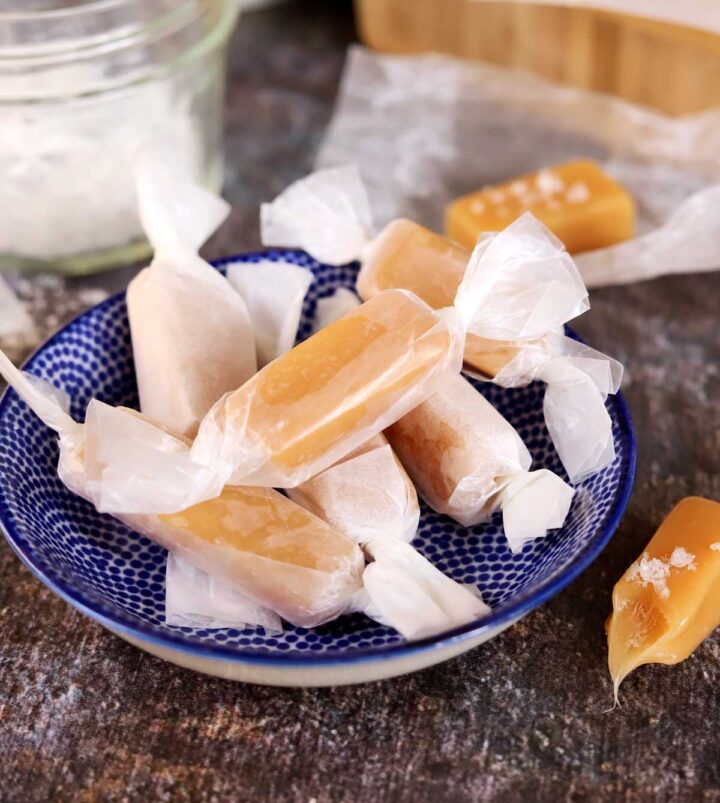
- STEP 4). Sprinkle sea salt over the top of each caramel, then wrap each one in a little square of cellophane, parchment or waxed paper. You should wrap them very soon after you cut them because the edges will begin to soften and lose their perfect shape. Caramels can be stored in an airtight container, in a cool dry place for up to 3 weeks. Or, store them in the fridge to keep them even longer.
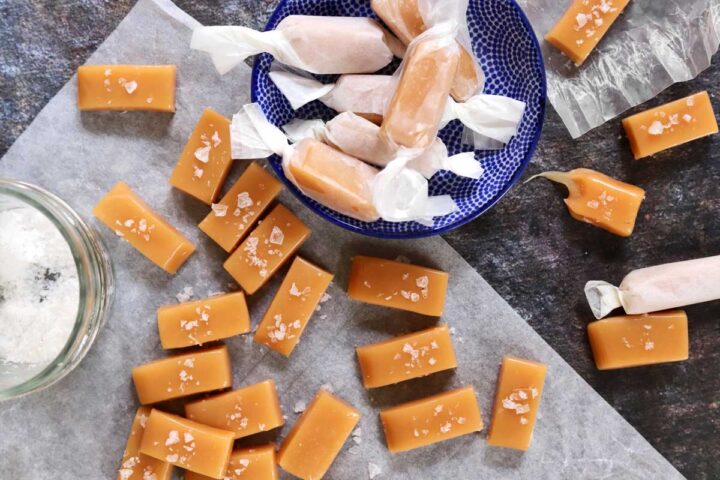
TOOLS FOR MAKING HOMEMADE CARAMELS
- Heavy bottomed stainless steel saucepan - a heavy pan will hold the heat and cook evenly. I love this pot that I use for caramel sauce, hot fudge, pastry cream, melting butter, browning butter, and so many other things!
- Candy thermometer - I use this digital thermometer which is actually a meat thermometer and serves many purposes!
- Silicone spatula - make sure you use a heat resistant spatula otherwise you will melt rubber.
EXPERT TIPS
- Test the accuracy of the thermometer by measuring the temperature of boiling water. Bring a pot of water to a boil, insert the thermometer and it should read 212°F at sea level. You will need to make the necessary adjustments to your cooking temperature if the thermometer reads above or below this number.
- Prep your ingredients first. Have all of the ingredients measured and at room temperature so they are ready to go before you begin making the sauce. The process moves quickly once the sugar starts to melt and pausing for a moment to measure ingredients may mean that you'll miss the timing for the next step and the sugar will burn.
- Make sure the pan is clean and the sugar is not contaminated.
- Use a light-bottomed 2-quart stainless steel saucepan with high sides that heats evenly. Do not use a dark colored non-stick pan because you will not be able to see the color of the sugar change.
- Cook over medium-high heat. Keeping the temperature up will ensure the sugar stays melted. The caramelization process will happen quickly, so do not walk away from the pan!
- Do not walk away. The caramelizing process proceeds very quickly once the sugar starts to turn yellow, so do not leave the pan unsupervised or it will burn.
RECIPE FAQ
You can make caramels without the butter, but they will lack body, flavor and be more sticky. Butter not only adds flavor, but it helps create a short texture that doesn't stick to your teeth.
It is not necessary to use a thermometer when making caramel, however it does make it much easier and more accurate. You can use the cold water test explained above if you do not have a thermometer.
Caramel becomes grainy if the sugar recrystallizes. This can happen when some liquid sugar syrup splashes up onto the sizes of the saucepan and immediately turn into crystals as they cool down. If this crystal touches the melted sugar in syrup, it causes a chain reaction and the sauce will seize up and become grainy.
I have been able to save grainy caramel. To do this, place the whole slab of soft caramel into the saucepan with about 4 tablespoons of water and mix on low heat while stirring constantly until melted and smooth. Then, bring to a boil and cook again as directed in the recipe.
These caramels have a soft texture that pulls apart smoothly and doesn't stick to your teeth.
Store the cooled slab of caramel in a cool dry place, wrapped well in parchment or waxed paper and then in a zip top bag or airtight container. If you slice the caramels, then wrap them individually in waxed paper or parchment and then store at room temperature in an airtight container.
Soft caramels will keep well in an airtight container in a cool place for 2 weeks, or you can also store them in the fridge for up to 1 month.
If you love caramel, check out these recipes!
Homemade Snickers Shortbread: Chocolate-Covered Caramel Shortbread Bars Molten Salted Caramel Fudge Brownies Salted Sour Cream Caramel Chocolate Tart Gingerbread Spiced Fig Crumble Bars with Salted Caramel DrizzleMore no-bake recipes
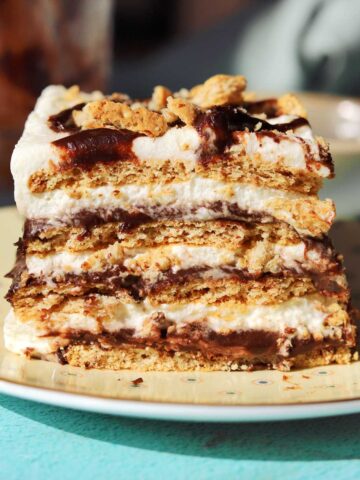
Looking for more delicious recipes without an oven? Try these:
Candy, candy, candy!
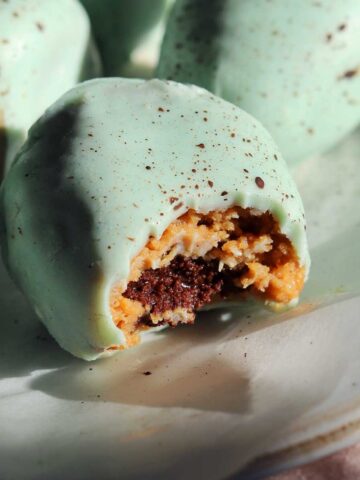
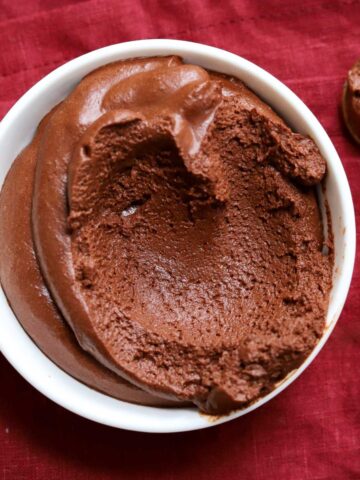
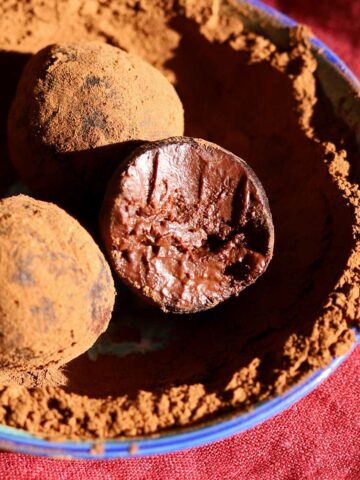
Do you enjoy making confectionery? Here are more homemade candy recipes:

Video
Homemade Soft Butter Caramels
Ingredients
- ½ cup (120ml) heavy 35% whipping cream
- ¼ cup (60ml) light or golden corn syrup
- ⅔ cup (135g) granulated sugar
- 2 tablespoon (28g) unsalted butter
- ½ teaspoon pure vanilla extract
- ¼ teaspoon fine table salt
- flaky sea salt such as Maldon
NOTE: this makes a small batch and you can easily double all ingredients and follow the same instructions for a double batch in an 8x8-inch square pan.
Instructions
- Line an 8.5 x 4.5-inch loaf pan (or an 8x8-inch metal baking pan if making the larger batch) with parchment paper, leaving a 2-inch overhang on each side and very lightly butter the parchment; set aside.
- Combine cream, corn syrup, sugar and butter in a heavy-bottomed 2 or 3-quart saucepan with high sides over medium-low heat. Stir constantly until sugar is dissolved. Increase heat slightly, bring the mixture to a boil and clip a candy thermometer to side of pan or have ready a digital thermometer.
- Continue to cook over medium to medium-low heat, stirring very frequently, until mixture reaches 235°F. Reduce heat slightly and continue to cook while stirring constantly until it reaches 246-248°F, about 15-20 minutes total cooking time. Stay close as the syrup will cook very quickly at this point - if the phone rings, don't answer it! Remove pan from heat, and quickly stir in vanilla extract and salt. (NOTE: sometimes I stir in an additional ½ tablespoon of butter with the vanilla to soften the texture further, but it is optional.) Immediately pour into prepared pan, without scraping the bottom of the pot.
- Let stand at room temperature without moving until completely cooled and set, about 3-4 hours. Pull up parchment to unmold cooled caramel, and invert onto a clean work surface. Peel off parchment. Use kitchen shears or a lightly oiled sharp long-bladed knife to cut the slab into ½-inch strips and then cut each strip into 1-inch pieces. I slice the slab widthwise into 13 x 4-inch strips, then slice those strips into 3 pieces to yield 39 caramels.
- The caramel should be nice and soft, and somewhat pliable so that it is easy to cut. Sprinkle sea salt over the top of each caramel, then wrap each one in a little square of cellophane, parchment or waxed paper. You should wrap them very soon after you cut them because the edges will begin to soften and lose their perfect shape. Caramels can be stored in an airtight container, in a cool dry place for up to 3 weeks. Or, store them in the fridge to keep them even longer.


Could these be chopped up and baked in a cookie?
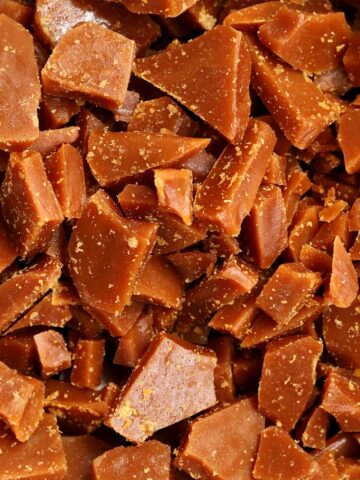
Hi Nicole! I haven't tested that but I think they will spread too much. You can try my Toffee Bits Recipe for that application.
Hello! I live in France and here with do not have corn syrup how can I replace it? Thanks
Hi Marie, you can use honey or glucose syrup. I think honey works nicely and I've made them this way.